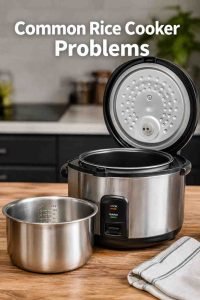
Have you ever lifted the lid and found a layer of brown rice stuck to the bottom? Why does my rice cooker burn rice is usually explained by water, starch, pot contact, or temperature control. In most cases, the appliance is not automatically defective.
The most common causes include using too little water, leaving excess starch on the grains, choosing the wrong cooking program, or keeping rice warm for too long. A dirty heating plate, damaged inner pot, or sensor problem can also cause scorching.
In this guide, I’ll show you how to identify the cause and fix it. I’ll also explain common rice cooker problems and how a rice cooker knows when to stop cooking.
Key Takeaway: Most burnt rice comes from incorrect water measurements, excess starch, poor cleaning, or unsuitable cooking settings. Persistent scorching can also indicate a damaged pot or temperature-control problem.
Why Does My Rice Cooker Burn Rice?
A rice cooker can scorch rice when moisture disappears too early or heat reaches the bottom unevenly. Once most water has been absorbed or evaporated, the temperature inside the pot can rise rapidly.
Automatic cookers use temperature changes to determine when cooking should end. Therefore, anything that affects water levels, pot contact, or temperature sensing can change the cooking result.
Common examples include insufficient water, excess surface starch, debris under the inner pot, and a damaged cooking bowl. Extended Keep Warm use can also dry the bottom layer.
What Are the Most Common Causes of Burnt Rice?
The main causes include incorrect water levels, excess starch, poor pot contact, dirty components, and prolonged warming. Checking these factors in order usually identifies the problem without replacing the appliance.
Could Too Little Water Be Causing the Scorching?
Too little water can leave rice undercooked and allow the bottom layer to dry and scorch. The correct amount depends on the rice type and your specific cooker.
Use the supplied measuring cup when possible. Also, follow the water markings inside the cooking bowl or the manufacturer’s instructions.
Brown rice often needs different treatment from white rice. Jasmine and basmati rice can also require different amounts of water.
Can Excess Starch Make Rice Stick and Burn?
Excess surface starch can make cooked rice stick together and cling to the inner pot. That stuck layer can then brown against the hot cooking surface.
Rinse rice according to the instructions for the rice and cooker. Several gentle rinses can remove loose surface starch before cooking.
However, rinsing does not guarantee that rice will never burn. Water level, pot condition, and temperature control still matter.
Could the Wrong Rice Setting Cause the Problem?
The wrong cooking program can produce poor results because different rice types need different cooking conditions. A dedicated setting can adjust the cooking cycle for a particular grain.
For example, brown rice usually needs more cooking time than standard white rice. Therefore, use the brown-rice program when your cooker provides one.
Always follow your model’s instructions rather than assuming every cooker uses identical programs.
Does Opening the Lid Affect Cooking?
Opening the lid releases heat and steam, which can disrupt the cooking cycle. Frequent interruptions can make moisture loss less predictable.
Keep the lid closed while the cooker works unless the manufacturer’s instructions say otherwise. Check the rice after the cooking cycle finishes instead.
Can Small Portions Burn More Easily?
Very small batches can cook differently from larger batches, especially when they fall below the manufacturer’s recommended capacity. The amount of food above the heating area affects the cooking conditions.
Check your rice cooker’s minimum capacity before preparing a tiny portion. If you regularly cook for one person, a small-capacity rice cooker may suit the job better.
Can Keep Warm Make the Bottom Dry?
Extended Keep Warm use can gradually dry and harden the rice near the bottom. The effect depends on the cooker, rice quantity, and holding time.
If the rice tastes fine immediately after cooking but develops a hard crust later, prolonged warming may be responsible. Follow the manufacturer’s recommended Keep Warm limits.
Helpful Tip: If scorching starts only after the rice has stayed warm for several hours, check the Keep Warm duration before assuming the cooker is broken.
Why Is the Rice Cooker Burning the Bottom?
A burnt bottom usually means the lower part of the pot is receiving excessive or uneven heat. Poor contact, debris, insufficient moisture, or a damaged cooking bowl can contribute.
Could a Dirty Heating Plate Cause Scorching?
A dirty heating plate can interfere with proper contact between the cooker and inner pot. Rice grains, dried starch, and other debris can create uneven contact points.
Unplug the cooker and let it cool completely before cleaning. Then remove visible debris using the cleaning method recommended by the manufacturer.
Keep the heating surface dry before replacing the inner pot.
What Happens When Food Gets Under the Inner Pot?
Food debris beneath the cooking bowl can interfere with contact between the pot and heating surface. Even a small grain of rice can affect how the bowl sits.
Before every cooking cycle, inspect the bottom of the inner pot. Also check the heating plate for moisture or residue.
Can a Warped Inner Pot Burn Rice?
A warped or uneven inner pot can prevent consistent contact with the heating surface and sensor area. That can contribute to uneven cooking.
Place the empty bowl on a flat surface and check whether it rocks. If the base looks distorted, consult the manufacturer about an approved replacement.
Can a Damaged Nonstick Coating Make Rice Stick?
A damaged nonstick surface can make cooked rice stick more easily. Stuck rice can then brown against the cooking surface.
Avoid metal utensils and abrasive scrubbers unless your manufacturer specifically permits them. Use the supplied rice paddle or another suitable utensil instead.
Why Does Uneven Heat Leave Only the Bottom Burnt?
The bottom layer sits closest to the heating surface, so it experiences the strongest direct heat. When moisture disappears too early, that layer can dry and brown first.
Check the water level, inner-pot condition, heating plate, and sensor-contact area before assuming the heating system has failed.
Could a Rice Cooker Sensor or Thermostat Be Faulty?
A sensor or temperature-control fault can cause abnormal heating when basic cooking and cleaning checks do not solve the problem. Automatic cookers rely on temperature information to manage the cooking cycle.
What Does the Temperature Sensor Do?
The temperature sensor helps the cooker monitor conditions at the cooking bowl. The control system uses that information to manage the cooking process.
Debris around the sensor area can interfere with proper contact. Therefore, inspect and clean the accessible area according to the manufacturer’s instructions.
Can a Faulty Heating Element Cause Burning?
A heating-element problem can cause abnormal or uneven heating. Persistent scorching despite correct measurements deserves further investigation.
Do not disassemble the appliance unless the manufacturer specifically provides safe service instructions. Electrical heating components can present a shock or fire hazard.
Could a Thermostat Problem Keep the Cooker Heating?
A temperature-control fault can prevent normal changes between cooking and warming modes. The exact control system varies by rice cooker.
If the appliance behaves differently from its normal cycle, check the owner’s manual for error codes or troubleshooting steps.
When Is the Cooker Probably Worn Out?
Repeated scorching after correct preparation and cleaning may indicate an aging or damaged appliance. The problem becomes more suspicious when every batch behaves the same way.
Before replacing the cooker, inspect the inner pot and contact surfaces. If those parts look normal, manufacturer service may be the better next step.
What Water Ratio Helps Prevent Burnt Rice?
The correct water amount depends on the rice variety and cooker model, so the manufacturer’s markings should take priority. There is no single ratio that works perfectly for every rice cooker.
| Rice Type | General Starting Point | Important Note |
|---|---|---|
| White rice | Follow cooker markings | Use the model’s recommended level first. |
| Jasmine rice | Follow cooker guidance | Water needs vary by rice and cooker. |
| Basmati rice | Follow cooker guidance | Rinsing can help remove loose starch. |
| Brown rice | Use the brown-rice instructions | The grain usually needs a different cycle. |
Do not automatically add extra water whenever rice burns. First compare your measurements with the manufacturer’s instructions.
If your cooker has water lines for specific rice types, use those markings. The supplied rice-cooker cup also helps maintain consistent measurements.
How Can You Stop Rice From Burning?
Accurate measuring, proper rinsing, clean contact surfaces, and the correct cooking program prevent most avoidable problems. Work through these steps before considering replacement.
How Should You Measure Rice and Water?
Use the measuring cup supplied with the cooker and follow the inner-pot water markings. Avoid estimating the amount with an unrelated household cup.
Consistent measurements make troubleshooting easier. If the same amount produces different results, you can then investigate the cooker itself.
If you are unsure about cooker capacity, this guide explains what a 1-liter rice cooker means and how capacity relates to cooking amounts.
How Should You Rinse the Rice?
Rinse the grains according to the rice and cooker instructions before starting the cooking cycle. Rinsing removes loose surface starch and can reduce sticking.
Avoid aggressive rubbing that could damage delicate grains. Drain the rice consistently so the added water remains predictable.
How Should You Clean the Inner Pot?
Clean the cooking bowl after each use with a method suitable for its surface. A soft sponge is generally preferable to abrasive cleaning tools.
Pay particular attention to dried rice and starch. Residue can affect future cooking and make the pot harder to clean.
How Should You Clean the Heating Plate?
Keep the heating plate clean and dry so the inner pot can sit correctly. Always unplug the appliance before cleaning.
Remove loose debris carefully and follow the manufacturer’s cleaning instructions. Never pour water into the electrical base.
How Can You Protect the Nonstick Coating?
Use utensils that will not scratch the cooking surface. The supplied rice paddle is usually the safest choice for routine use.
Also, avoid cutting or scraping rice directly inside the bowl. A damaged surface can make sticking more difficult to control.
Should Rice Rest Before You Fluff It?
A short resting period can help moisture distribute through the cooked grains. The appropriate time depends on the cooker and rice variety.
Follow your model’s instructions first. Then fluff the rice gently with a suitable paddle.
How Do You Choose the Right Cooking Program?
Match the program to the rice variety whenever your cooker provides dedicated settings. Different grains can require different cooking times and moisture levels.
Using the appropriate mode helps the cooker follow the cycle intended for that food. Avoid assuming the standard white-rice setting works for every grain.
What Rice Cooker Habits Commonly Cause Burning?
Guessing measurements, ignoring fill lines, skipping maintenance, and using a damaged bowl can all increase cooking problems. Small habits often create repeatable results.
- Guessing water: Measure consistently instead of relying on visual estimates.
- Ignoring capacity: Stay within the manufacturer’s minimum and maximum levels.
- Skipping rinsing: Follow appropriate preparation instructions for the rice.
- Using a damaged pot: Replace an inner bowl that no longer sits correctly.
- Neglecting cleaning: Remove residue from accessible cooking surfaces.
- Opening the lid repeatedly: Let the cooking cycle run without unnecessary interruptions.
- Using Keep Warm too long: Follow the manufacturer’s recommended holding period.
When Should You Replace the Rice Cooker?
Consider replacement when persistent burning continues after you correct measurements, clean the cooker, and inspect the inner pot. Repeated problems can indicate a component fault or significant wear.
What If the Heating Element Shows Signs of Failure?
Abnormal or inconsistent heating can justify professional inspection or appliance replacement. Avoid opening the electrical base yourself.
If the cooker repeatedly scorches one area, compare the result with a known-good cooking cycle. Persistent abnormalities deserve attention.
When Should You Replace the Inner Pot?
Replace an inner pot when it becomes warped, severely damaged, or otherwise unsuitable for safe cooking. Use a replacement approved for the exact cooker model.
Do not assume that another pot with the same capacity will fit correctly. Pot shape, sensor contact, and dimensions can differ between models.
When Does a Sensor Problem Need Service?
A sensor issue needs professional attention when cleaning and correct pot placement do not restore normal operation. Temperature-control components are part of the appliance’s electrical system.
Check the manufacturer’s troubleshooting guide first. If an error code appears, use the instructions for that specific model.
What If Every Batch Still Burns?
Consistent burning after correct preparation points more strongly toward an appliance or component problem. At that stage, continued recipe adjustments may not solve the underlying issue.
Contact the manufacturer or an authorized service provider if the cooker remains under warranty. Otherwise, compare repair costs with the price of a suitable replacement.
Is Rice Cooked in a Cooker Less Likely to Burn Than Boiled Rice?
A properly used automatic rice cooker can reduce the need for manual heat adjustments. However, a rice cooker can still scorch rice when preparation or appliance conditions are wrong.
How Does Automatic Temperature Control Help?
Automatic temperature control lets the cooker manage heat without constant manual adjustment. Many models use temperature sensing as part of this process.
As cooking progresses, changes inside the pot help the appliance determine when the cooking cycle should change. You can learn more about how rice cookers detect when cooking is complete.
Why Can Stovetop Rice Still Be Useful?
Stovetop cooking gives experienced cooks more direct control over heat and cooking time. That flexibility can help with certain grains or large batches.
However, stovetop cooking also requires closer attention. Heat that stays too high can produce its own burnt layer.
How Can You Use a Rice Cooker More Reliably?
Reliable results come from consistent measurements, suitable settings, correct capacity, and regular maintenance. A simple routine removes many variables that cause inconsistent cooking.
- Measure the rice with the supplied cup when available.
- Add water using the cooker markings or manual.
- Rinse the grains according to the recommended preparation.
- Check the inner pot for debris, moisture, or damage.
- Seat the pot correctly against the heating surface.
- Select the appropriate program for the rice.
- Keep the lid closed during the cooking cycle.
- Limit Keep Warm use according to the manufacturer’s guidance.
- Clean the cooker after use.
What Should You Check First When Rice Burns?
Start with the simplest causes before investigating internal components. The following checklist gives you a practical troubleshooting order.
- Check whether you measured the rice and water correctly.
- Confirm that the rice type matches the selected program.
- Inspect the underside of the inner pot.
- Remove rice or debris from the heating plate.
- Check the accessible temperature-sensor area.
- Make sure the cooking bowl sits evenly.
- Consider whether Keep Warm caused the dryness.
- Check for unusual error codes or cooking behavior.
- Contact the manufacturer if the problem continues.
Pro Tip: If the cooker burns rice despite correct measurements and a clean, undamaged pot, stop changing the water ratio repeatedly. Investigate the appliance instead.
Frequently Asked Questions
Why does my rice cooker burn rice?
A rice cooker usually burns rice when moisture runs out too early or heat becomes uneven. Check the water amount, rice preparation, inner pot, heating plate, and cooking program first.
How do I stop my rice cooker from burning rice?
Use the correct water level, rinse the rice appropriately, clean the contact surfaces, and select the right cooking mode. Also avoid exceeding the cooker’s recommended capacity.
Why does my rice cooker burn the bottom?
The bottom can scorch when insufficient moisture or uneven heat concentrates near the cooking surface. A dirty plate, warped pot, or sensor-contact problem can contribute.
Why does my rice cooker burn rice even with enough water?
Correct water levels do not rule out pot, sensor, heating, or cooking-cycle problems. Inspect the inner pot and heating area before changing the water ratio again.
Can a dirty heating plate cause rice to burn?
Yes, debris can interfere with proper contact between the cooking bowl and heating surface. Clean the accessible area after unplugging and cooling the appliance.
Does Keep Warm burn rice?
Extended warming can dry and harden the bottom layer. Follow the holding-time guidance for your particular cooker.
Why does my rice cooker boil over?
Boil-over can result from excess water, excess starch, overfilling, or unsuitable cooking conditions. Stay within the manufacturer’s fill markings and prepare the rice properly.
Why does my rice come out sticky?
Sticky rice can result from excess surface starch or too much cooking water. Rinse the grains appropriately and follow the recommended water level.
Can too much water cause burnt rice?
Too much water usually makes rice softer rather than directly causing scorching. However, prolonged cooking or warming can still affect texture and cause sticking.
Can too little water burn rice?
Yes, insufficient water can allow the rice to dry before cooking finishes. The lower grains can then scorch against the hot cooking surface.
Is burnt rice safe to eat?
Heavily charred food is best discarded rather than eaten. If only a small portion has browned, avoid scraping the charred layer into the rest of the rice.
Why is only the bottom layer burnt?
The bottom sits closest to the heating surface, so it receives direct heat first. Early moisture loss or uneven contact can therefore scorch the lower layer while the top remains edible.
Final Thoughts
Why does my rice cooker burn rice often has a simple answer: water, starch, cleaning, pot contact, cooking settings, or prolonged warming. A faulty component is possible, but it should not be the first assumption.
Start with accurate measurements and appropriate rice preparation. Then inspect the inner pot, heating plate, and sensor-contact area.
If the problem continues despite those checks, the appliance may need professional service or replacement. For more rice-cooker guidance, you can also explore common rice cooker faults.
Authoritative Reference:USDA Food Safety and Inspection Service
Related Articles