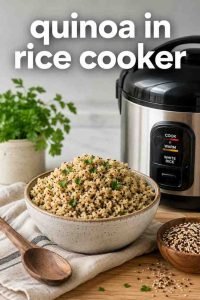
A rice cooker can do far more than cook rice. Depending on the model, you can use one to steam vegetables and dumplings, cook quinoa and other grains, prepare oatmeal, make soups and one-pot meals, cook eggs and some proteins, and even make certain desserts or yogurt. The key is choosing a cooker whose functions, capacity, and inner pot match the foods you want to prepare.
This guide explains the most useful alternative uses for rice cooker owners, what works with basic models, which tasks require specialized functions, and what to look for if you want a truly multipurpose appliance.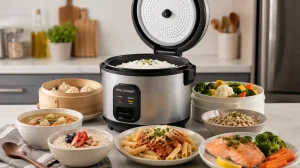
What Can You Use a Rice Cooker For Besides Rice?
The simplest answer is that a rice cooker can handle many foods that are normally boiled, steamed, simmered, or cooked with moist heat. However, the exact possibilities depend on the design of the cooker.
A basic rice cooker may be useful for steaming vegetables, cooking certain grains, preparing oatmeal, and making simple one-pot dishes. A more advanced model may add dedicated programs for porridge, soup, slow cooking, steaming, cake, bread, quinoa, or yogurt.
That distinction matters because a rice cooker should not automatically be treated as a replacement for every kitchen appliance. Always check the manufacturer’s instructions before using a cooking method that is not specifically supported by your model.
- Steam: Vegetables, dumplings, fish, eggs, and other suitable foods.
- Cook grains: Quinoa, couscous, bulgur, barley, and other grains when the cooker supports them.
- Make breakfast: Oatmeal, porridge, and similar grain-based meals.
- Prepare one-pot meals: Soups, stews, rice-based meals, and selected pasta dishes.
- Cook proteins: Some fish, chicken, eggs, and other foods using steaming or simmering methods.
- Prepare desserts: Certain cakes, puddings, rice pudding, and other moist desserts in compatible models.
- Make yogurt: Models with a dedicated yogurt function can provide a more suitable temperature-controlled environment.
These uses make the appliance particularly useful for people who want simple meal preparation without constantly watching a pot on the stove.
9 Practical Alternative Uses for a Rice Cooker
The most useful alternative uses for a rice cooker are the ones that take advantage of the appliance’s existing strengths: controlled heating, trapped steam, automatic cooking cycles, and, on some models, specialized programs.
1. Steaming Vegetables
Steaming vegetables is one of the easiest ways to use a rice cooker for something other than rice. If your cooker includes a steaming basket or tray, you can place vegetables above the water and let the steam cook them until tender.
Broccoli, carrots, cauliflower, asparagus, peas, and similar vegetables are natural candidates for this method. The biggest advantage is convenience: the cooker can handle the steaming while you prepare the rest of the meal.
A steaming basket also creates opportunities for multitasking. On compatible models, rice can cook in the main pot while vegetables cook above it. That can turn a basic rice-and-vegetable meal into a relatively hands-off cooking process.
Do not assume every rice cooker includes a steaming accessory. If steaming is important to you, check whether the model comes with a suitable basket or tray before buying it.
2. Cooking Quinoa, Couscous and Other Grains
One of the most practical alternative uses for a rice cooker is cooking grains other than rice. Quinoa, couscous, bulgur, barley, millet, and other grains can be prepared in suitable rice cookers, although the required liquid and cooking method can vary considerably.
Quinoa is particularly useful because it fits naturally into the rice cooker’s one-pot cooking approach. Instead of standing over a saucepan, you can use a compatible cooker to handle the cooking cycle.
Do not automatically use the same water-to-grain ratio for every grain. Different grains absorb different amounts of liquid and may require different cooking times. A dedicated grain or quinoa program can make this easier, but the manufacturer’s instructions should take priority.
If quinoa is one of the main reasons you are considering a rice cooker, you can learn more about the specific cooking method in this quinoa rice cooker guide.
Cooking grains also gives the rice cooker a broader role in meal preparation. You can build bowls around quinoa, couscous, or another grain and combine them with vegetables, beans, proteins, sauces, and seasonings.
3. Preparing Soups, Stews and One-Pot Meals
A rice cooker can also be useful for simple soups, stews, and one-pot meals, particularly when the model provides an appropriate cook, simmer, or slow-cook function.
This is where the appliance becomes more than a rice cooker. A suitable one-pot meal can combine a grain or starch with vegetables, broth, seasonings, and a protein in one cooking vessel.
However, the presence of a rice cooker does not automatically mean it can function exactly like a slow cooker. Some basic models are designed around a relatively simple cooking cycle, while multifunction models may provide more control.
Capacity is another important consideration. Soups, pasta, grains, and other foods can expand during cooking, so you should never fill the cooking pot beyond the manufacturer’s recommended level.
If one-pot meals are an important reason for buying a rice cooker, a dedicated guide to rice cookers for one-pot meals can help you focus on models suited to that style of cooking.
The main advantage is convenience. Instead of using a separate pot for the starch, another pan for vegetables, and another vessel for the protein, a suitable rice cooker can simplify certain meals into one cooking process.
4. Making Oatmeal or Porridge
Oatmeal is another excellent answer to the question, what else can I use a rice cooker for? The appliance can prepare different types of oats and porridge when the cooker and recipe are suitable for the task.
Rolled oats, steel-cut oats, and other oatmeal preparations can work particularly well with a cooker that has a porridge or oatmeal setting. The controlled cooking process also means you do not need to stand beside a saucepan constantly watching it.
Liquid requirements depend on the type of oats and the texture you want. Milk can also behave differently from water during cooking, so recipes using milk should be followed carefully to prevent excessive foaming or overflow.
Oatmeal is especially useful for small households because you can prepare a modest breakfast without using a large saucepan. If smaller portions are your priority, see the guide to rice cookers for smaller portions.
You can also customize oatmeal with fruit, nuts, cinnamon, seeds, or other ingredients after cooking. That makes the rice cooker useful for breakfast as well as lunch and dinner.
5. Steaming Dumplings and Dim Sum
A rice cooker with a suitable steaming basket can also prepare dumplings, buns, and other foods that benefit from moist heat.
The process is straightforward: add the appropriate amount of water to the cooking pot, arrange the food in the steaming basket, close the lid, and use the available steaming function or manufacturer’s recommended method.
Spacing matters because steam needs room to circulate. Overloading the basket can produce uneven cooking, especially when several dumplings are packed tightly together.
Sticking can also be a problem. Depending on the food and basket design, a suitable liner or another manufacturer-approved method may help prevent delicate dough from adhering to the steaming surface.
This is another reason a steaming basket can significantly expand the purpose of a rice cooker. A cooker that includes a well-designed steaming accessory can be useful for vegetables, dumplings, fish, eggs, and other foods in addition to rice.
6. Cooking Pasta and Risotto
Pasta can be prepared in some rice cookers, particularly when the cooker can maintain an appropriate cooking temperature. Smaller pasta shapes can be practical because they fit more easily inside the pot.
Capacity is important because pasta absorbs water and expands during cooking. The uncooked amount that appears small at first can become substantially larger once fully cooked.
Risotto is another possible use because it is already a moist, grain-based dish. A suitable rice cooker can simplify the cooking process by keeping the ingredients contained in one vessel.
However, not every rice cooker will reproduce the exact technique used on a stovetop. If a recipe requires frequent stirring, sautéing, or a specific temperature, make sure the cooker has the necessary function before adapting the recipe.
The goal is not to force every recipe into a rice cooker. The better approach is to choose dishes whose cooking requirements naturally match what the appliance can do.
7. Cooking Eggs, Potatoes, Beans and Lentils
Eggs are another useful food to prepare in a rice cooker, especially when the appliance has a steaming basket. Eggs can be cooked using suitable steaming methods, provided the cooker and recipe support the process.
Potatoes can also work well with steaming. Once tender, they can be used for mashed potatoes, potato salad, or other dishes.
Beans and lentils are possible in some rice cookers, but this category requires more attention to cooking time, liquid, expansion, and the individual appliance’s instructions. Foods that foam heavily or expand significantly can create problems if the cooking vessel is overfilled.
For these foods, the safest approach is to use a recipe designed for your specific type of rice cooker rather than assuming that every model behaves identically.
8. Cooking Fish, Chicken and Other Proteins
Can you cook meat in a rice cooker? In some cases, yes, but the cooking method matters. Rice cookers are better suited to steaming, simmering, or cooking meat as part of an appropriate one-pot recipe than to frying meat.
Fish can be particularly suitable for steaming because the moist cooking environment can help keep delicate fillets from drying out. Chicken and other proteins may also be used in appropriate recipes when the cooker can maintain the required cooking conditions.
Food safety remains essential. Meat and poultry must be thoroughly cooked to a safe internal temperature, and the cooker should never be treated as a substitute for a properly designed pressure cooker unless it is specifically designed and rated for pressure cooking.
When experimenting with proteins, follow the manufacturer’s instructions and use a reliable food thermometer where appropriate. A rice cooker is a convenience appliance, not a reason to ignore basic food-safety practices.
9. Baking, Desserts and Yogurt
Some rice cookers can go beyond savory foods and prepare cakes, breads, puddings, or other moist desserts. However, baking is one of the most model-dependent alternative uses for a rice cooker.
A cooker designed with a bake or cake function is much easier to use for these recipes than a basic rice cooker with only simple cook and warm controls. Recipes may also need to be adapted because the heat pattern is different from that of a conventional oven.
Moist desserts can be particularly compatible with the enclosed cooking environment. Rice pudding and similar dishes also fit naturally into the appliance’s ability to cook grains with liquid.
Yogurt is another specialized use. A rice cooker with a dedicated yogurt function is designed to provide a more suitable environment for the fermentation process than a basic cooker.
If yogurt is a major priority, consider a model specifically designed for that function. You can explore rice cookers with a yogurt function rather than assuming that every rice cooker can safely or consistently make yogurt.
What Can a Rice Cooker Do That a Regular Pot Cannot?
A rice cooker does not necessarily make food that a regular saucepan cannot make. Its main advantage is the way it manages the cooking process.
Once the appropriate ingredients, liquid, and program are selected, many rice cookers can monitor the cooking cycle and transition between cooking and warming automatically. That can reduce the amount of attention required compared with a pot on a stovetop.
Some models also provide dedicated programs for different grains, porridge, steaming, soup, slow cooking, or other tasks. Advanced models can therefore be considerably more versatile than basic cook-and-warm appliances.
Steaming is another advantage when a suitable basket is included. It can allow foods such as vegetables or dumplings to cook using steam without requiring a separate stovetop steamer.
Still, the rice cooker is not a universal replacement for a saucepan, frying pan, oven, or pressure cooker. Its value comes from matching the appliance’s capabilities to the foods you actually prepare.
How to Choose a Rice Cooker for Multiple Uses
If you want a rice cooker mainly for rice, a simple model may be enough. If you want the appliance to become a multipurpose cooking tool, however, the buying decision changes.
The best multi purpose rice cooker should be selected according to the tasks you expect to perform rather than the number of buttons on the control panel.
Steaming Basket and Cooking Accessories
A steaming basket can dramatically increase the range of foods you can prepare. It is particularly useful for vegetables, dumplings, fish, and eggs.
Before buying, check whether the basket is included, how it fits inside the cooker, and whether its size is appropriate for the portions you normally prepare.
If steaming is one of your main goals, do not overlook this seemingly simple accessory. It can be more useful to you than a long list of specialized cooking presets you never intend to use.
Cooking Programs and Multipurpose Functions
Cooking programs should match your intended uses. If you want oatmeal, look for an appropriate porridge or oatmeal setting. If you want yogurt, look for a dedicated yogurt function. If you want soups or slow-cooked meals, check for functions designed for those tasks.
Do not assume that similar names mean identical capabilities between brands. Always verify what the manufacturer’s manual says each program is designed to do.
A cooker with more functions is not automatically the best rice cooker to buy. The better choice is the model whose functions correspond to your actual cooking routine.
Capacity for Family Meals and Small Portions
Capacity becomes even more important when you use a rice cooker for foods other than rice. Pasta expands, grains absorb liquid, and soups need enough room to simmer without overflowing.
At the other end of the scale, a large cooker may be unnecessarily cumbersome if you mainly prepare oatmeal, rice, or individual portions.
Think about the foods you expect to cook most often and choose a size that provides enough working space without encouraging overfilling.
For smaller households, a dedicated guide to small-quantity rice cookers can help narrow down the appropriate capacity.
Inner-Pot Material and Nonstick Considerations
The inner pot deserves attention when a rice cooker will be used frequently for different foods. Oatmeal, sauces, soups, grains, and other recipes can place different demands on the cooking surface than plain rice.
Some buyers specifically want to avoid conventional nonstick coatings, while others prioritize easy cleanup. If you are looking for the best non toxic rice cooker or a best rice cooker without nonstick lining, verify the exact material and coating information for the model rather than relying on general product descriptions.
Readers specifically interested in cookware without PFAS can compare the available options in this guide to PFAS-free rice cookers.
Stainless steel is another option worth investigating if you prefer an uncoated cooking surface. A separate guide to rice cookers with stainless steel inner pots can help readers focus on that particular requirement.
Cleaning and Maintenance
Multipurpose cooking can mean more cleanup. Rice is relatively simple, but oatmeal, soups, sauces, and other sticky or strongly flavored foods can leave more residue behind.
Check which parts are removable and how the manufacturer recommends cleaning them. If dishwasher-safe components are important to you, verify that information for the exact model instead of assuming every rice cooker supports it.
Regular cleaning also helps prevent old food residue and moisture from accumulating inside the appliance. Allow washable components to dry properly before reassembly.
Can You Use a Rice Cooker Safely for Other Foods?
Yes, but only when the cooking method is appropriate for the specific rice cooker. The fact that a recipe exists online does not mean every rice cooker is designed to handle it safely.
Start with the manufacturer’s manual. Check the recommended ingredients, maximum fill level, available cooking programs, steaming accessories, and restrictions before adapting a recipe.
Be particularly careful with foods that expand, foam, or create a large amount of steam. Overfilling can interfere with normal operation and may allow food or liquid to reach parts of the appliance that should remain dry.
Keep the steam outlet clear and do not obstruct vents. Steam can cause serious burns, so open the lid carefully and keep your hands and face away from escaping steam.
Do not use the appliance for pressure cooking unless it is specifically designed as a pressure cooker. A conventional rice cooker should not be treated as an improvised pressure vessel.
Food safety also matters when preparing meat, poultry, seafood, eggs, and other perishable foods. Use appropriate cooking temperatures and avoid leaving cooked food at unsafe temperatures for extended periods.
If you want to understand more about rice cooker safety and potential problems, see this guide on what can cause a rice cooker to become dangerous.
Safety reminder: A rice cooker can be versatile without being universal. Always follow the manufacturer’s instructions, respect the maximum fill level, keep vents clear, and use only cooking methods supported by your specific model.
Common Questions About Alternative Uses for a Rice Cooker
Can Rice Cookers Be Used for Other Things?
Yes. Depending on the model, a rice cooker can be used for steaming vegetables and dumplings, cooking grains and oatmeal, preparing soups and one-pot meals, cooking eggs and certain proteins, and making selected desserts or yogurt.
The available functions vary by model, so check the manufacturer’s instructions before using the cooker for a new type of food.
What Other Recipes Can You Make in a Rice Cooker?
Rice cooker recipes can include quinoa, oatmeal, porridge, steamed vegetables, dumplings, eggs, fish, soups, stews, pasta, risotto, rice pudding, and other one-pot meals. Some specialized models can also handle yogurt, cakes, or bread.
The most appropriate recipes are those that match the cooking functions and capacity of your particular cooker.
Can You Make Popcorn in a Rice Cooker?
Popcorn is not a recommended experiment for a standard rice cooker. The appliance is not designed to function as a dedicated popcorn popper, and uncontrolled heating or pressure from the popping process can create safety concerns.
Use equipment specifically designed for popcorn instead of trying to force a rice cooker into a task it was not designed to perform.
Can You Put an Egg in a Rice Cooker?
Yes, eggs can be prepared in some rice cookers using appropriate steaming or cooking methods. A steaming basket can be useful for hard-cooked eggs, while some recipes use the main cooking pot for other egg preparations.
Follow a recipe appropriate for your model and handle the hot steam carefully when opening the cooker.
Can Rice Cookers Be Used for Baking?
Some rice cookers can prepare cakes, breads, and other baked-style foods, but baking is highly dependent on the model. A cooker with a dedicated cake or bake function is better suited to these recipes than a basic rice cooker.
Do not assume that a standard cook-and-warm model can safely reproduce every oven recipe.
Can You Cook Meat in a Rice Cooker?
Some rice cookers can cook meat through steaming, simmering, or suitable one-pot recipes. They are not generally designed for frying meat, and cooking performance depends on the model and recipe.
Always make sure meat and poultry reach a safe internal temperature before serving.
Are There Other Rice Cooker Recipes Not Listed Here?
Yes. The possible recipes extend beyond the examples in this article. Depending on the cooker, recipes can include different grains, legumes, rice-based meals, soups, desserts, steamed foods, and other moist-heat preparations.
The important limitation is that not every rice cooker can perform every cooking task. The manufacturer’s instructions should determine which recipes are appropriate for your model.
How Does a Rice Cooker Work?
A basic rice cooker heats the cooking pot until the cooking process reaches the point where the cooker can switch from its primary cooking mode to a warming state. More advanced models can use sensors and programmed cooking cycles to adjust the process for different foods.
This automatic control is one reason a rice cooker can be useful beyond rice. The appliance can manage a cooking cycle without requiring the same constant attention as a saucepan on a stovetop.
If you want a more detailed explanation of the automatic shutoff process, see how a rice cooker knows when to stop cooking.
What Are Some Alternative Uses for a Rice Cooker Beyond Cooking Rice?
The most practical alternative uses include steaming vegetables and dumplings, cooking quinoa and other grains, making oatmeal and porridge, preparing soups and one-pot meals, cooking eggs and selected proteins, and making certain desserts.
Specialized rice cookers can expand the list further with functions such as slow cooking, baking, or yogurt preparation.
How Do You Use a Rice Cooker Safely for Other Foods?
Use only recipes and cooking functions that are appropriate for your specific model, stay within the recommended capacity, keep steam vents clear, and handle hot steam carefully.
For meat, poultry, seafood, and eggs, use appropriate food-safety practices and confirm that the food is fully cooked before eating.
Final Thought
The best alternative uses for rice cooker are the ones that fit naturally with the appliance’s design. Steaming vegetables and dumplings, cooking grains and oatmeal, and preparing simple one-pot meals are among the most practical uses. More specialized tasks such as baking and yogurt making depend heavily on the model.
If you are buying a rice cooker specifically for multipurpose cooking, focus less on the number of buttons and more on the functions you will actually use. A suitable steaming basket, adequate capacity, useful cooking programs, and an inner pot that matches your material preferences can make a much bigger difference.
In short, a rice cooker can be a useful kitchen workhorse rather than a single-purpose appliance, provided you choose the right model and stay within its intended capabilities.