
Can you cook quinoa in a rice cooker without watching the pot? Yes. A rice cooker can prepare fluffy, tender quinoa with very little hands-on work. The key is using the measuring cup and cooking instructions specified for your model. If your cooker has no quinoa instructions, a 1:2 quinoa-to-liquid ratio is a well-supported starting point.
Harvard’s Nutrition Source specifically recommends cooking quinoa in a rice cooker with one part quinoa to two parts liquid. However, manufacturer instructions can differ. For example, some Zojirushi models use less water and a dedicated Quick or Quinoa program, while Panasonic models may use two supplied measuring cups of water for one cup of quinoa.
This guide explains the ratio, measuring method, rinsing process, cooking settings, timing, troubleshooting, storage, and easy flavor variations. If you regularly prepare large batches, our guide to meal prep rice cookers can help you choose a suitable appliance.
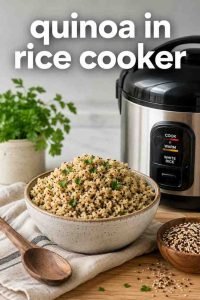
What Is the Best Way to Cook Quinoa in a Rice Cooker?
The best approach is to follow your rice cooker’s quinoa instructions first, then use the standard 1:2 ratio when no model-specific guidance exists. Rinse the quinoa when appropriate, add the correct liquid, select the proper program, and let the cooker complete its cycle.
For a basic method, combine one cup of dry quinoa with two cups of water or broth. Use the measuring cup specified by your rice cooker rather than assuming every cooker uses a standard US cup.
Harvard confirms that one cup of dry quinoa generally produces about three cups cooked. The same source recommends two parts liquid to one part dry quinoa for rice-cooker preparation.
What Do You Need to Prepare Quinoa?
You only need quinoa, liquid, and optional seasoning to prepare a basic batch. Water works well, while broth adds more savory flavor.
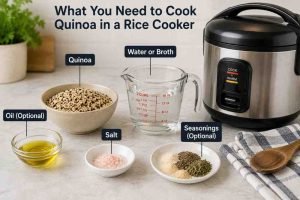
- Quinoa: Use white, red, black, or tri-color quinoa.
- Water: Use the amount specified by your rice cooker manual.
- Broth: Substitute vegetable or chicken broth when you want more flavor.
- Salt: Add a small amount to enhance the quinoa’s natural flavor.
- Oil or butter: Optional, but a small amount may help reduce sticking.
- Herbs and spices: Add garlic, cumin, paprika, turmeric, parsley, cilantro, or other seasonings.
Do not assume that every rice cooker uses the same cup size. Panasonic, for example, specifies a supplied measuring cup of about 180 mL for certain models.
Which Quinoa Varieties Work in a Rice Cooker?
White, red, black, and tri-color quinoa can all be prepared in a rice cooker. The main difference is texture rather than whether the appliance can cook the quinoa.
White Quinoa
White quinoa has a mild flavor and soft texture. That combination makes it an easy starting point for everyday meals, salads, and side dishes.
Red Quinoa
Red quinoa tends to retain more of its shape after cooking. The firmer texture works particularly well in salads and grain bowls.
Black Quinoa
Black quinoa usually has a firmer texture and stronger flavor than white quinoa. It works well when you want the cooked grains to remain distinct.
Tri-Color Quinoa
Tri-color quinoa combines different quinoa varieties in one blend. Follow the cooking directions on the package or rice cooker because blends can vary.
What Is the Quinoa-to-Water Ratio for a Rice Cooker?
A 1:2 quinoa-to-liquid ratio is a reliable starting point for many rice cookers. However, the manufacturer’s instructions should take priority because different appliances can use different ratios and programs.
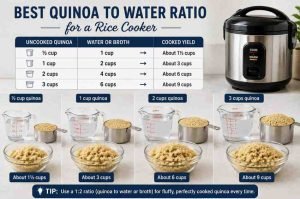
Harvard recommends one cup of quinoa with two cups of liquid for rice-cooker preparation. Panasonic also specifies two supplied measuring cups of water for one cup of quinoa on several listed models.
However, Zojirushi gives a different general instruction for certain rice cookers: one cup of quinoa with 1¼ cups of water using the Quick setting. That difference shows why the rice cooker’s manual matters.
| Dry Quinoa | Starting Liquid* | Approximate Cooked Yield |
|---|---|---|
| ½ cup | 1 cup | About 1½ cups |
| 1 cup | 2 cups | About 3 cups |
| 2 cups | 4 cups | About 6 cups |
| 3 cups | 6 cups | About 9 cups |
*The liquid amounts above use the general 1:2 starting ratio. Follow your rice cooker manual when it specifies a different amount.
Which Measuring Cup Should You Use?
Use the measuring cup specified or supplied by your rice cooker manufacturer. Rice-cooker cups are often smaller than a standard US measuring cup.
Panasonic specifies an approximately 180 mL supplied cup for several rice cookers. Zojirushi also instructs users to measure quinoa with the rice measuring cup included with the cooker.
Using a different cup can change the ratio between quinoa and liquid. Therefore, always use the same measuring system for both ingredients when your manual provides a specific cup.
Should You Rinse Quinoa Before Cooking?
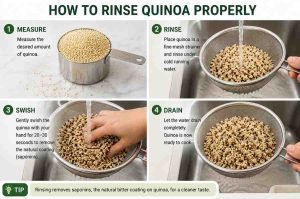
Rinsing quinoa can reduce bitter or soapy flavors caused by naturally occurring saponins. However, packaged quinoa is often pre-rinsed, so check the package instructions before deciding whether another rinse is necessary.
Why Does Quinoa Sometimes Taste Bitter?
Saponins are natural compounds found on the outer surface of quinoa seeds. They can contribute a bitter or soapy taste when significant amounts remain.
Rinsing quinoa can reduce the amount of these compounds remaining on the seeds. Follow the package directions when the manufacturer specifically recommends rinsing.
How Do You Rinse Quinoa Properly?
Place the quinoa in a fine-mesh strainer and rinse it thoroughly under cool running water. Gently move the seeds around so the water reaches the entire batch.
Drain the quinoa well before adding it to the cooking bowl. Avoid adding a large amount of unmeasured rinse water because it can alter the intended liquid ratio.
Can You Skip Rinsing?
You can skip an additional rinse when the package specifically says the quinoa is pre-rinsed. Still, follow the package directions if they recommend washing the seeds before cooking.
How Do You Cook Quinoa in a Rice Cooker?
The basic process involves measuring, rinsing when appropriate, adding liquid, selecting the correct program, and letting the cooker finish. The exact program and liquid amount depend on the appliance.
- Measure the quinoa: Use the measuring cup specified by your rice cooker.
- Rinse the quinoa: Rinse thoroughly when the package or recipe recommends it.
- Drain well: Remove excess rinse water before measuring the cooking liquid.
- Add the ingredients: Place the quinoa, measured liquid, salt, and optional seasonings into the cooking bowl.
- Select the program: Choose Quinoa or Grain when available. Otherwise, follow the manufacturer’s recommended alternative.
- Close the lid: Keep the lid closed throughout the cooking cycle.
- Let the cycle finish: Allow the rice cooker to complete its programmed process.
- Rest if needed: If the quinoa remains slightly wet, keep it covered briefly before fluffing.
- Fluff: Use a fork or the manufacturer’s recommended scoop to separate the grains.
Automatic rice cookers vary in how they control cooking. For more background, our guide explains how a rice cooker knows when to stop.
What Rice Cooker Setting Should You Use?
Use a dedicated Quinoa or Grain setting when your rice cooker provides one. If the appliance lacks that program, follow the manufacturer’s instructions for the closest suitable setting rather than assuming White Rice always works.
Quinoa Setting
A dedicated Quinoa setting is the most straightforward option when your appliance provides one. The manufacturer has programmed that cycle specifically for quinoa.
Zojirushi currently documents quinoa programs on some models, while its official guidance also gives a Quick setting for certain rice cookers.
White Rice Setting
Some rice cookers use the White Rice setting successfully for quinoa. However, you should only use that program when the manufacturer’s instructions support it.
For example, certain Aroma rice cookers provide quinoa instructions that use the White Rice program. The correct method still depends on the specific model.
Quick or Grain Programs
Quick and grain programs can work well when the manufacturer specifically lists quinoa for those settings. Zojirushi’s official guidance gives a Quick setting for quinoa on certain models.
One-Button Rice Cookers
A basic rice cooker can still prepare quinoa when its cooking instructions support the grain. Add the ingredients, select the available cooking function, and allow the appliance to complete the cycle.
Do not assume every one-button cooker uses the same liquid ratio. The manual remains the best source for model-specific instructions.
How Long Does Quinoa Take in a Rice Cooker?
Cooking time varies by rice cooker, program, quinoa quantity, and manufacturer settings. Therefore, a single universal cooking time is not reliable for every appliance.
Some Panasonic models list approximately 28–32 minutes for their Quinoa program, while other appliances can use different cycles.
For that reason, treat the manufacturer’s stated cooking time as the primary reference.
How Do You Know When Quinoa Is Done?
Fully cooked quinoa becomes tender and often develops a small white spiral or tail around the seed. Most of the cooking liquid should also be absorbed.
The white tail is the quinoa germ unfolding during cooking. That visual change is a useful sign that the seeds have cooked properly.
If your quinoa remains wet, keep it covered for a short period before checking again. If it remains firm, follow the troubleshooting steps below rather than automatically adding a large amount of water.
How Do Aroma, Zojirushi, and Panasonic Rice Cookers Differ?
Rice cooker brands can use different quinoa ratios, programs, capacities, and cooking times. Therefore, brand names alone do not determine the correct method.
Aroma Rice Cooker
Some Aroma models provide quinoa instructions through their standard cooking programs. Check the manual for your exact model before choosing the setting or liquid amount.
Zojirushi Rice Cooker
Zojirushi provides model-specific quinoa guidance, and some models include dedicated quinoa programs. Its official guidance gives different instructions depending on the rice cooker model.
Some Zojirushi models use a Quick program, while others provide a dedicated Quinoa menu. Therefore, use the manual for the exact cooker you own.
Panasonic Rice Cooker
Panasonic provides model-specific quinoa instructions with its supplied measuring cup. Several listed models use one cup of quinoa with two supplied cups of water.
Panasonic also lists specific capacity limits for some models. That detail matters when preparing larger batches.
Rice Cookers Without a Quinoa Program
A dedicated quinoa program is helpful but not essential when the manufacturer provides another suitable cooking method. Follow the model’s instructions rather than copying another rice cooker’s settings.
If you are comparing appliances, our guide to rice cookers with stainless steel inner pots covers another feature that can matter when choosing a cooker.
Can You Cook Two Cups of Quinoa?
You can cook two cups of quinoa only when your rice cooker supports that quantity. Quinoa expands substantially, so capacity limits matter.
Using the general 1:2 starting ratio would mean two cups of quinoa and four cups of liquid. However, use your manufacturer’s ratio when the manual specifies a different amount.
Some Panasonic models support two cups of quinoa, while others have lower limits. Always check the capacity listed for your particular appliance.
What Liquids Can You Use for Quinoa?
Water is the simplest option, but broth can add more flavor without changing the basic cooking process. Use the same total liquid volume required by your rice cooker instructions.
Vegetable Broth
Vegetable broth gives quinoa a savory flavor while keeping the dish vegetarian. Low-sodium broth provides more control over the final salt level.
Chicken Broth
Chicken broth creates a richer savory profile. It pairs particularly well with roasted vegetables, poultry, and grain bowls.
Coconut Milk
Coconut milk can create a richer quinoa dish for breakfast or tropical-inspired meals. Because coconut milk changes the liquid composition, follow your cooker or recipe instructions when substituting it for water.
Which Seasonings Work Best With Quinoa?
Salt, garlic, cumin, paprika, herbs, and citrus all work well with quinoa. Add seasonings during cooking when appropriate, then finish the dish with fresh ingredients.
- Garlic and parsley: Create a simple savory side dish.
- Cumin and coriander: Add warm, earthy flavor.
- Turmeric: Adds color and an earthy spice note.
- Cilantro and lime: Create a bright, fresh finish.
- Lemon and oregano: Work well for Mediterranean-style dishes.
- Cinnamon and fruit: Turn cooked quinoa into a breakfast bowl.
Can You Cook Rice and Quinoa Together?
Rice and quinoa can be cooked together, but there is no universal liquid ratio for every combination. The rice variety, quinoa quantity, and rice cooker program all affect the result.
White rice, brown rice, and quinoa have different absorption and cooking characteristics. Therefore, follow a recipe or appliance instruction specifically designed for the combination.
Why Is My Quinoa Mushy?
Mushy quinoa usually results from excess liquid, an unsuitable cooking program, or overcooking. The first step is to check the manufacturer’s recommended ratio for your model.
- Too much liquid: Measure the quinoa and cooking liquid carefully.
- Wrong program: Use the quinoa or grain setting when available.
- Excess cooking: Avoid leaving quinoa on an unsuitable heating program longer than necessary.
- Overfilling: Follow the rice cooker’s maximum capacity.
Why Is My Quinoa Crunchy?
Crunchy quinoa usually indicates that the grains did not receive enough usable moisture or cooking time. Check the ratio and program before changing the recipe.
If the cooker has finished but the grains remain firm, follow your manufacturer’s instructions for additional cooking or moisture. Avoid adding large amounts of water without checking the recommended ratio first.
Why Does Quinoa Taste Bitter?
A bitter or soapy flavor can result from remaining saponins on the quinoa. Rinsing the seeds thoroughly can reduce that flavor.
Packaged quinoa is often pre-rinsed, but the package directions should determine whether another rinse is needed.
Why Does Quinoa Stick to the Rice Cooker?
Quinoa can stick when moisture evaporates near the end of cooking or when the cooking surface encourages adhesion. A small amount of oil may reduce sticking, but oil is not required for cooking quinoa.
Using the correct liquid amount is more important than adding extra oil. If sticking remains a recurring problem, the inner-pot design may also influence cleanup.
Our guide to rice cookers with stainless steel inner pots can help if inner-pot material is part of your buying decision.
What Should You Do If Quinoa Overflows?
Overflow usually means the cooking bowl has exceeded its recommended capacity or the selected cooking method is unsuitable. Quinoa expands as it absorbs liquid, so leave adequate room in the bowl.
Do not exceed the grain capacity stated in your rice cooker manual. Model-specific limits can vary considerably.
Is Quinoa Better Than Rice?
Quinoa offers more protein and fiber than cooked white rice, while both foods can fit into a balanced diet. The better choice depends on the meal, texture, nutritional goals, and personal preference.
How Much Protein Does Quinoa Provide?
One cup of cooked quinoa provides about 8 grams of protein. Quinoa also contains all nine essential amino acids, making it a complete protein source.
How Much Fiber Does Quinoa Provide?
One cup of cooked quinoa provides about 5 grams of fiber. That fiber contributes to the nutritional value of quinoa as a grain alternative.
Is Quinoa Good for Meal Prep?
Quinoa works well for meal prep because cooked portions can be refrigerated, frozen, and reheated. The cooked seeds also work in salads, bowls, soups, and side dishes.
If batch cooking is your main goal, our guide to rice cookers for meal prep covers appliances designed around larger cooking tasks.
How Should You Store Cooked Quinoa?
Refrigerate cooked quinoa promptly in a covered container and use it within about four days. Prompt refrigeration helps reduce the risk of foodborne illness.
Can You Freeze Cooked Quinoa?
Cooked quinoa can be frozen for longer-term meal preparation. Divide it into practical portions and use freezer-safe containers or bags.
Smaller portions make reheating easier and reduce repeated thawing and refreezing.
How Do You Reheat Quinoa?
Microwave reheating works well when you add a small splash of water and cover the container loosely. The added moisture helps restore a softer texture.
Fluff the quinoa after reheating to separate the grains.
What Can You Make With Cooked Quinoa?
Cooked quinoa works in salads, grain bowls, soups, side dishes, stuffed vegetables, and breakfast bowls. Its mild flavor makes it easy to combine with savory or sweet ingredients.
- Salads: Combine quinoa with vegetables, chickpeas, herbs, and dressing.
- Grain bowls: Add roasted vegetables, beans, tofu, chicken, fish, or other proteins.
- Soups: Stir cooked quinoa into vegetable, chicken, or lentil soup.
- Side dishes: Finish with lemon, herbs, garlic, or butter.
- Stuffed vegetables: Mix quinoa with vegetables, beans, herbs, or meat.
- Breakfast bowls: Add fruit, cinnamon, nuts, yogurt, or maple syrup.
For more ideas, see our guide to alternative rice cooker uses.
What Makes a Good Rice Cooker for Quinoa?
A good rice cooker for quinoa should provide clear grain instructions, suitable capacity, reliable cooking controls, and an appropriate inner pot. A dedicated quinoa program is useful, but it is not the only important feature.
- Quinoa or grain program: Provides a purpose-built cooking cycle when available.
- Clear manufacturer instructions: Removes guesswork about ratios and settings.
- Suitable capacity: Prevents overfilling when preparing larger batches.
- Accurate measuring cup: Helps maintain the manufacturer’s intended ratio.
- Easy-clean inner pot: Makes repeated meal preparation more convenient.
- Automatic cooking controls: Reduce the need to monitor the cooking cycle.
If your main priority is the cooking surface, our guide to rice cookers with stainless steel inner pots offers a more focused comparison.
For readers concerned about cooking surfaces, our guide to PFAS-free rice cookers covers another buying consideration.
What Are the Most Common Quinoa Cooking Mistakes?
The most common mistakes involve using the wrong ratio, ignoring model-specific instructions, exceeding capacity, and choosing an unsuitable program. Correct measurement solves many problems before cooking begins.
- Using the wrong cup: Use the measuring system specified by your cooker.
- Assuming every cooker uses 1:2: Check the manual first.
- Choosing White Rice automatically: Use Quinoa or Grain when the manufacturer specifies it.
- Overfilling the bowl: Respect the appliance’s quinoa capacity.
- Adding unmeasured rinse water: Drain the quinoa before adding the measured cooking liquid.
- Opening the lid repeatedly: Keep the cooking cycle closed unless the manual says otherwise.
Frequently Asked Questions
Can you cook quinoa in a rice cooker?
Yes, quinoa can be cooked successfully in many rice cookers. Use the manufacturer’s quinoa instructions when available. If no model-specific guidance exists, a 1:2 quinoa-to-liquid ratio is a practical starting point.
What is the best quinoa to water ratio in a rice cooker?
A 1:2 ratio is a well-supported starting point for many rice cookers. However, some manufacturers specify different ratios, so the appliance manual takes priority.
What setting do I use to cook quinoa in a rice cooker?
Use the dedicated Quinoa or Grain setting when your rice cooker provides one. Otherwise, follow the manufacturer’s instructions for the appropriate alternative program.
How long does quinoa take to cook in a rice cooker?
Cooking time depends on the rice cooker and selected program. Some Panasonic models list roughly 28–32 minutes, while other appliances can use different cycles.
Do you need to rinse quinoa before cooking it?
Rinsing is recommended when the package or recipe calls for it and can reduce bitter flavors from remaining saponins. Many packaged products are already pre-rinsed.
How much water do I use for 1 cup of quinoa?
Start with two cups of liquid for one cup of quinoa when using the general 1:2 method. Check the rice cooker manual first because some models use less liquid.
Can you cook two cups of quinoa in a rice cooker?
Yes, but only if your rice cooker supports that quantity. Some models limit quinoa to one cup per batch, while others support larger quantities.
Can quinoa and rice be cooked together?
Yes, but the correct liquid amount depends on the rice variety and appliance. Use a recipe or manufacturer instruction designed for the combined grains.
Can you cook red quinoa in a rice cooker?
Yes, red quinoa can be prepared in a rice cooker. Follow the package or appliance instructions because texture and liquid requirements can vary.
Can you cook black quinoa in a rice cooker?
Yes, black quinoa can be cooked in a rice cooker. It generally retains a firmer texture than white quinoa.
Can you use broth instead of water for quinoa?
Yes, broth can replace water when the recipe and rice cooker allow it. Vegetable broth and chicken broth can add more savory flavor.
Why is my quinoa mushy?
Mushy quinoa often results from excess liquid or an unsuitable cooking cycle. Check the manufacturer’s ratio before reducing or increasing the liquid.
Why is my quinoa crunchy?
Crunchy quinoa usually means the grains did not absorb enough moisture or complete the required cooking process. Check the liquid ratio and selected program before making adjustments.
Why does quinoa taste bitter?
Remaining saponins can give quinoa a bitter or soapy flavor. Rinsing the seeds thoroughly can reduce that taste.
How much cooked quinoa does one cup make?
One cup of dry quinoa produces about three cups cooked. The exact yield can vary slightly with the cooking method and liquid amount.
Can cooked quinoa be stored in the refrigerator?
Yes, cooked quinoa can be refrigerated in a covered container and generally used within four days. Refrigerate cooked quinoa promptly rather than leaving it at room temperature for extended periods.
Final Thoughts
Cooking quinoa in a rice cooker is simple when you treat the manufacturer’s instructions as the first source of truth. The general 1:2 ratio works as a useful starting point, but different rice cookers can use different ratios and programs.
- Measure correctly: Use the measuring cup specified by your rice cooker.
- Rinse when appropriate: Follow the package instructions and rinse to reduce remaining saponins when needed.
- Check the ratio: Use the manufacturer’s quinoa ratio whenever one exists.
- Choose the right program: Prefer Quinoa or Grain when the cooker provides that option.
- Respect capacity: Quinoa expands considerably during cooking.
- Check texture: Properly cooked quinoa should be tender and separate rather than excessively wet.
- Store leftovers safely: Refrigerate cooked quinoa promptly and use it within about four days.
For regular batch cooking, a rice cooker for meal prep can make weekly cooking easier. If you mainly cook small portions, consider a rice cooker for small quantities instead.
Overall, quinoa is one of the easiest grains to prepare with a rice cooker. Once the correct ratio and program are established for your specific appliance, the process becomes simple, repeatable, and convenient.