🍳 Editor’s Take: A home kitchen does not need a dozen specialized blades. A dependable chef’s knife, paring knife, and bread knife can handle most preparation tasks, while a santoku or vegetable knife can add useful alternatives.
Which kitchen knives are best for home cooks?
The best choices depend on cooking style, but an all-purpose chef’s knife should usually come first. The 10 options below cover everyday prep, vegetables, bread, detailed cutting, and premium Japanese-style performance.
- Best Overall: WÜSTHOF Classic 8 Inch Chef’s Knife
- Best Premium Chef’s Knife: Misono UX10 Chef’s Knife
- Best Japanese Santoku: MAC Professional Series 6.5-inch Santoku
- Best German Santoku: Wüsthof Classic Hollow Edge Santoku
- Best Vegetable Knife: Global 7-inch Vegetable Knife
- Best Japanese Vegetable Knife: Tojiro Kitchen Knife F-502
- Best Budget Paring Knife: Victorinox 3.25-inch Paring Knife
- Best Premium Paring Knife: WÜSTHOF Classic 3.5-inch Paring Knife
- Best Japanese Bread Knife: Tojiro Hand Made Bread Knife
- Best Budget Bread Knife: Dexter-Russell Basics 10-inch Scalloped Slicer
How do these kitchen knives compare?
The comparison below shows where each knife fits before the detailed reviews.
| Badge | Product | Knife Type | Size | Price | Best Use |
|---|---|---|---|---|---|
| Best Overall Chef’s Knife | WÜSTHOF Classic 8 Inch Chef’s Knife | Chef’s knife | 8″ | $170.00 | Everyday cooking |
| Best Premium Chef’s Knife | Misono UX10 Chef’s Knife No.712/21cm | Chef’s knife | 7.9″ / approx. 8.2″ | $280.50 | Precision cutting |
| Best Japanese Santoku Knife | MAC Professional Series 6.5″ Santoku MSK-65 | Santoku | 6.5″ | $128.95 | Precise everyday prep |
| Best German Santoku Knife | Wüsthof Classic Hollow Edge Santoku 7″ | Santoku | 7″ | $170.00 | Vegetables and general prep |
| Best Vegetable Knife | Global 7″ Vegetable Knife | Vegetable knife | 7″ | $93.99 | Vegetable preparation |
| Best Japanese Vegetable Knife | Tojiro Kitchen Knife F-502 | Vegetable knife | 6.5″ | Price not supplied | Chopping and slicing vegetables |
| Best Budget Paring Knife | Victorinox 3.25 Inch Paring Knife | Paring knife | 3.3″ | $14.70 | Peeling and detail work |
| Best Premium Paring Knife | WÜSTHOF Classic 3.5″ Paring Knife | Paring knife | 3.5″ | $95.00 | Detailed preparation |
| Best Japanese Bread Knife | Tojiro Japan Hand Made Bread Knife | Bread knife | 9.3″ | $79.95 | Bread and baked foods |
| Best Budget Bread Knife | Dexter-Russell Basics P94804B 10″ Scalloped Slicer | Bread knife | 10″ | $23.00 | Bread on a budget |
Prices shown are the supplied research prices and may change on Amazon.
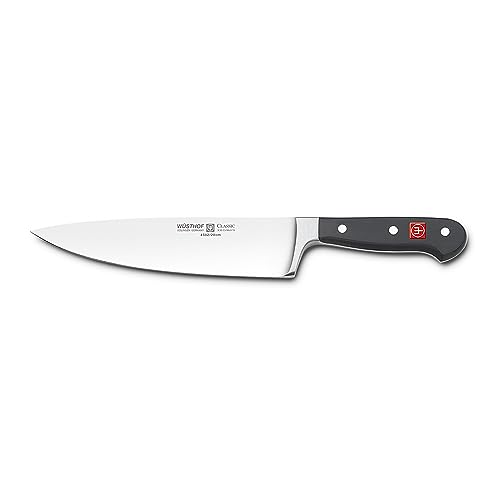
WÜSTHOF Classic 8 Inch Chef’s Knife
Best Overall Chef’s Knife
Best For: Home cooks who want one versatile knife for most daily preparation.
WüSTHOF
WÜSTHOF Classic 8 Inch Chef’s Knife,Black,8-Inch
This 8-inch chef's knife is the article's best overall pick for versatile home cooking. Its forged construction, full tang, and all-purpose profile make it suitable for chopping, slicing, mincing, and dicing.
Who Should Buy It
Home cooks who want one dependable knife for most daily preparation should consider it. It also suits cooks who prefer the substantial feel of a traditional German chef's knife.
Why We Pick It
It earned the top spot because the 8-inch blade provides broad versatility while the full-tang and triple-riveted construction support control and durability.
Features & Benefits
| Feature | Benefit |
|---|---|
| 8-inch blade | useful reach for everyday preparation |
| Forged construction | substantial feel and durable build |
| Full tang | solid connection between blade and handle |
| Triple-riveted handle | secure grip for repeated cutting |
| 58 HRC hardness | balance of edge retention and practical sharpening |
Pros & Cons
| Pros | Cons |
|---|---|
| ✓ Versatile 8-inch size | ✕ Relatively expensive |
| ✓ Forged construction | ✕ May feel heavier than Japanese-style knives |
| ✓ Full-tang design |
Why We Choose It
The WÜSTHOF Classic 8-inch chef’s knife is the most versatile choice in this lineup. Its 8-inch blade suits chopping, slicing, mincing, and dicing across many ingredients.
The supplied product information lists a full-tang construction, triple-riveted handle, and lifetime warranty. WÜSTHOF’s current official information also identifies the Classic as a forged German knife with 58 HRC hardness and an 8-inch blade. WÜSTHOF’s official product information provides the current specifications and care guidance.
Features and Benefits
- 8-inch blade: Gives enough cutting length for large ingredients without feeling oversized.
- Forged construction: Provides a substantial knife suited to controlled everyday preparation.
- Full tang: Extends the blade through the handle for a solid, balanced feel.
- Triple-riveted handle: Provides a secure grip for repeated kitchen work.
- 58 HRC hardness: Balances edge retention with practical sharpening and durability.
- All-purpose profile: Handles meat, fish, fruit, vegetables, herbs, chopping, and mincing.
Pros and Cons
| Pros | Cons |
|---|---|
| Versatile 8-inch size | Costs more than budget chef knives |
| Forged construction | Full bolster may not suit every grip |
| Strong everyday versatility | Hand washing is recommended |
| Long-standing Classic design | May feel heavier than Japanese-style knives |
Editor Analysis
Who should buy it
Choose this knife if one blade needs to handle most home cooking tasks. The 8-inch format works especially well for cooks who use traditional rocking and chopping motions.
Who should avoid it
Skip this option if a very light Japanese-style knife is the main priority. A santoku or Japanese chef knife may feel quicker in the hand.
Important limitations
The full-sized design takes more storage space than a compact petty or paring knife. WÜSTHOF also recommends hand washing and immediate drying.
What we noticed
The strongest advantage is versatility. The knife can serve as the central blade in a small home collection.
Misono UX10 Chef’s Knife No.712/21cm
Best Premium Chef’s Knife
Best For: Experienced cooks who want a premium Japanese-style chef’s knife.

MISONO
Misono UX10 Chef's Knife No.712/21cm
The Misono UX10 is the premium chef's knife in the article, aimed at cooks who value precise cutting and premium construction. Its Swedish steel and asymmetrical edge distinguish it from the heavier German-style option.
Who Should Buy It
Experienced home cooks who prioritize cutting precision over price should consider it. It is less suitable for beginners who want simple maintenance and a forgiving knife.
Why We Pick It
It earned its premium position because of its precision-focused design, stain-resistant construction, and asymmetrical edge.
Features & Benefits
| Feature | Benefit |
|---|---|
| Approximately 8.2-inch blade | useful reach for general food preparation |
| Swedish steel | supports premium cutting performance |
| Asymmetrical edge | provides a refined cutting profile |
| Stain-resistant construction | simplifies routine care |
| Chef's knife profile | handles many preparation tasks |
Pros & Cons
| Pros | Cons |
|---|---|
| ✓ Premium cutting performance | ✕ Very expensive |
| ✓ Precise asymmetrical edge | ✕ Requires careful sharpening |
| ✓ Stain-resistant construction |
Why We Choose It
The Misono UX10 targets cooks who value precise cutting and premium construction. The supplied product information identifies it as Misono’s top-of-the-line knife using Swedish steel.
The asymmetrical edge can appeal to cooks who prefer a highly precise cutting feel. However, that design also makes sharpening technique more important.
Features and Benefits
- Approximately 8.2-inch blade: Gives enough reach for vegetables, meat, and general food preparation.
- Swedish steel: Supports the premium positioning and precise cutting performance.
- Asymmetrical edge: Supports a refined cutting profile for controlled slicing.
- Stain-resistant construction: Makes everyday care easier than highly reactive carbon steel.
- Chef’s knife profile: Covers many preparation tasks with one primary blade.
Pros and Cons
| Pros | Cons |
|---|---|
| Premium cutting performance | Very expensive |
| Precise asymmetrical edge | Requires more care during sharpening |
| Versatile chef’s knife format | Less suitable for casual buyers |
| Stain-resistant construction | Premium price may not suit every kitchen |
Editor Analysis
Who should buy it
Choose the UX10 if cutting precision matters more than price. The knife makes sense for experienced home cooks who understand proper sharpening and handling.
Who should avoid it
Budget-focused cooks should choose a more affordable chef knife. Beginners may also prefer a simpler symmetrical edge.
Important limitations
The $280.50 supplied price places this knife firmly in the premium category. Its specialized edge also deserves careful maintenance.
What we noticed
The UX10 fills a different role from the WÜSTHOF. The WÜSTHOF emphasizes familiar German heft, while the Misono emphasizes Japanese-style precision.
MAC Professional Series 6.5″ Santoku MSK-65
Best Japanese Santoku Knife
Best For: Home cooks who prefer a compact, precise santoku for vegetables and everyday preparation.
MAC KNIFE
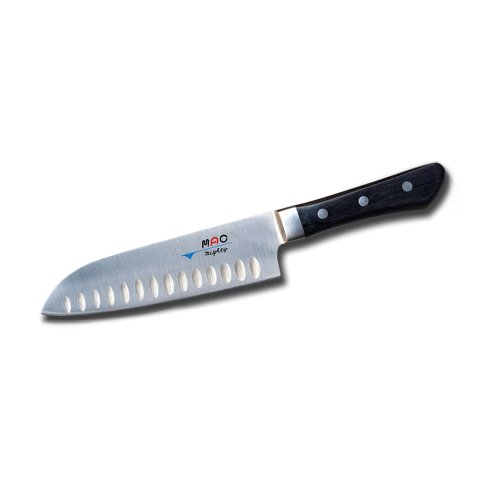
MAC Knife Professional series 6.5" Santoku with dimples MSK-65, made in Japan
The MAC Professional Series MSK-65 is the article's compact Japanese santoku choice for precise everyday preparation. Its 6.5-inch blade offers control for chopping and slicing while remaining shorter than a full-size chef's knife.
Who Should Buy It
Home cooks who prefer a nimble Japanese-style santoku should consider it. It is particularly suitable for vegetables, herbs, and routine meal preparation.
Why We Pick It
It earned its spot because the thin 2.5 mm blade, sharp edge, sub-zero tempered steel, and compact size emphasize controlled cutting.
Features & Benefits
| Feature | Benefit |
|---|---|
| 6.5-inch blade | compact control for everyday prep |
| 2.5 mm blade | relatively thin cutting profile |
| Dimples | can help reduce food sticking |
| Sub-zero tempered steel | supports edge retention |
| Pakka wood handle | comfortable traditional grip |
Pros & Cons
| Pros | Cons |
|---|---|
| ✓ Compact santoku profile | ✕ Not dishwasher safe |
| ✓ Sharp cutting edge | ✕ Shorter reach than a chef's knife |
| ✓ Made in Japan |
Why We Choose It
The MAC Professional Series santoku offers a compact alternative to a full-sized chef’s knife. Its 6.5-inch blade suits controlled chopping and slicing without the extra length of an 8-inch chef knife.
The supplied information lists a 2.5 mm blade, sub-zero tempered steel, and a black Pakka wood handle. MAC recommends hand washing, and the knife is not dishwasher safe.
Features and Benefits
- 6.5-inch blade: Gives precise control for everyday preparation.
- 2.5 mm blade: Keeps the knife relatively thin for controlled cutting.
- Razor-sharp edge: Helps reduce effort during slicing and chopping.
- Sub-zero tempered steel: Supports edge retention during regular use.
- Pakka wood handle: Provides a comfortable traditional grip.
- Made in Japan: Fits the knife’s Japanese-style design and positioning.
Pros and Cons
| Pros | Cons |
|---|---|
| Compact santoku profile | Not dishwasher safe |
| Thin 2.5 mm blade | Hand washing requires extra care |
| Sharp cutting edge | Costs more than basic santoku knives |
| Japanese construction | Less blade length than an 8-inch chef’s knife |
Editor Analysis
Who should buy it
This knife suits cooks who like short, nimble blades. It is especially useful for vegetables, herbs, and routine meal preparation.
Who should avoid it
Choose a longer chef’s knife if large ingredients are common in the kitchen. A 6.5-inch santoku provides less cutting length.
Important limitations
The knife should not go into the dishwasher. Hand washing is recommended to protect the blade and handle.
What we noticed
The compact size makes this model an appealing middle ground between a paring knife and a full chef’s knife.
Wüsthof Classic Hollow Edge Santoku 7″
Best German Santoku Knife
Best For: Home cooks who want santoku-style cutting with the heft of a German knife.

WüSTHOF
Wusthof 4183 Wusthof Classic Hollow Edge Santoku Knife 7, 7", Black
The Wüsthof Classic Hollow Edge Santoku brings a German-style build to the shorter santoku format. The 7-inch blade is positioned for vegetables and general preparation, with hollow-edge dimples designed to reduce food sticking.
Who Should Buy It
Cooks who like the compact profile of a santoku but prefer the substantial feel of a German knife should consider it. It works well for vegetable-heavy preparation.
Why We Pick It
It earned a spot because it combines a useful 7-inch size, high-carbon stainless steel, and a hollow-edge design.
Features & Benefits
| Feature | Benefit |
|---|---|
| 7-inch blade | balance of reach and control |
| Hollow edge | helps reduce food sticking |
| High-carbon stainless steel | supports durability and edge performance |
| Santoku profile | suited to chopping and slicing |
| Classic construction | substantial everyday feel |
Pros & Cons
| Pros | Cons |
|---|---|
| ✓ Useful 7-inch size | ✕ Relatively expensive |
| ✓ Hollow-edge blade | ✕ May feel heavier than Japanese santoku knives |
| ✓ High-carbon stainless steel |
Why We Choose It
The Wüsthof Classic Hollow Edge Santoku combines a 7-inch santoku format with Wüsthof’s Classic design approach. The blade size offers useful control without becoming too short for general preparation.
The supplied information identifies high-carbon stainless steel construction and a black synthetic handle. The hollow-edge design is also useful when ingredients tend to cling to a flat blade.
Features and Benefits
- 7-inch santoku blade: Provides a useful balance between reach and control.
- Hollow edge: Creates small air pockets that can help reduce food sticking.
- High-carbon stainless steel: Supports durability and edge performance.
- Classic construction: Gives the knife a substantial feel for everyday cooking.
- Santoku profile: Works well for slicing, chopping, and general food preparation.
Pros and Cons
| Pros | Cons |
|---|---|
| Useful 7-inch size | $170 supplied price is relatively high |
| Hollow-edge blade | May feel heavier than Japanese santoku options |
| High-carbon stainless steel | Not the smallest kitchen knife |
| Versatile santoku profile | May not replace a long chef’s knife for every task |
Editor Analysis
Who should buy it
This model works for cooks who want santoku handling but prefer the feel of a traditional German knife.
Who should avoid it
A MAC santoku may suit cooks who prefer a lighter Japanese-style knife. A WÜSTHOF chef knife may also be more versatile for rocking cuts.
Important limitations
The 7-inch blade provides less reach than a full-size chef’s knife. The price also places it above many basic santoku alternatives.
What we noticed
The hollow-edge design makes this option particularly interesting for vegetable-heavy preparation.
Global 7″ Vegetable Knife
Best Vegetable Knife
Best For: Home cooks who prepare large amounts of vegetables and prefer a lightweight knife.

GLOBAL
Global 7" Vegetable Knife
The Global 7-inch Vegetable Knife is designed for cooks who spend significant time preparing vegetables. Its lightweight and balanced construction gives it a different feel from heavier German-style knives.
Who Should Buy It
Home cooks with vegetable-heavy meal preparation should consider it. It is also a good fit for users who prefer lightweight stainless-steel knives.
Why We Pick It
It earned its position because of its vegetable-focused shape, lightweight balance, molybdenum/vanadium stainless steel, and dimpled stainless handle.
Features & Benefits
| Feature | Benefit |
|---|---|
| 7-inch blade | useful reach for vegetables |
| Molybdenum/vanadium stainless steel | supports a durable edge |
| Lightweight construction | can reduce fatigue |
| Balanced design | improves control |
| Dimpled stainless handle | provides grip points |
Pros & Cons
| Pros | Cons |
|---|---|
| ✓ Lightweight design | ✕ More specialized than a chef's knife |
| ✓ Vegetable-focused blade | ✕ Metal handle may not suit every user |
| ✓ Balanced construction |
Why We Choose It
The Global 7-inch Vegetable Knife focuses on vegetable preparation. Its lightweight, precisely balanced construction can make repetitive chopping and slicing more comfortable.
The supplied information lists high-tech molybdenum/vanadium stainless steel and a stainless-steel handle with dimples for grip.
Features and Benefits
- 7-inch blade: Gives useful cutting coverage for vegetables without excessive length.
- Molybdenum/vanadium stainless steel: Supports a durable sharp edge.
- Lightweight construction: Can reduce fatigue during repeated preparation.
- Precisely balanced design: Helps improve control during chopping and slicing.
- Dimpled stainless handle: Provides grip points for secure handling.
- Limited lifetime guarantee: Adds long-term manufacturer support.
Pros and Cons
| Pros | Cons |
|---|---|
| Lightweight design | Specialized compared with a chef’s knife |
| Excellent vegetable focus | $93.99 supplied price |
| Balanced construction | Metal handle may not suit every grip |
| Stainless-steel construction | Less versatile for some large ingredients |
Editor Analysis
Who should buy it
This knife is a strong choice for plant-heavy kitchens and cooks who spend significant time chopping vegetables.
Who should avoid it
Choose a chef’s knife instead if one blade needs to handle meat, fish, vegetables, and herbs equally.
Important limitations
The specialized vegetable focus limits its role as a single all-purpose kitchen knife.
What we noticed
The lightweight construction separates the Global from heavier German-style options.
Tojiro Kitchen Knife F-502
Best Japanese Vegetable Knife
Best For: Cooks who want a hard, thin Japanese-style blade for vegetable preparation.

TOJIRO
Tojiro Kitchen Knife F-502
The Tojiro F-502 is the article's Japanese vegetable-focused option for precise chopping and slicing. The Amazon listing shown confirms the 6.5-inch size and the 4.6-star rating from 419 customer reviews.
Who Should Buy It
Home cooks who want a compact Japanese-style knife for vegetable preparation should consider it. It suits cooks who value a thin, precise cutting feel.
Why We Pick It
It earned its spot because its 6.5-inch blade, VG-10 core, 3-ply clad construction, 60 HRC hardness, and fine 9–12° edge angle emphasize precise cutting.
Features & Benefits
| Feature | Benefit |
|---|---|
| 6.5-inch blade | provides controlled reach for vegetable preparation |
| VG-10 core | provides a hard stainless-steel cutting core |
| 3-ply clad construction | surrounds the core with stainless-steel layers |
| 60 HRC hardness | supports a hard, sharp edge |
| 9–12° blade angle | supports precise cutting |
| Full tang | provides a solid blade-to-handle connection |
Pros & Cons
| Pros | Cons |
|---|---|
| ✓ Precise Japanese-style cutting | ✕ Hard steel needs careful handling |
| ✓ VG-10 core | ✕ Price not supplied |
| ✓ Compact 6.5-inch size |
Why We Choose It
The Tojiro F-502 brings several technical features into a compact 6.5-inch vegetable knife. The supplied specifications list a VG-10 steel core surrounded by stainless-steel layers.
The listed 60 Rockwell hardness and 9–12 degree blade angle indicate a knife designed around a hard, fine edge. Those characteristics can support precise cutting, but they also call for sensible handling and maintenance.
Features and Benefits
- VG-10 core: Provides a hard stainless-steel cutting core designed for sharpness and edge retention.
- 3-ply clad construction: Surrounds the core with stainless steel for added protection.
- 60 Rockwell hardness: Supports a hard cutting edge for precise preparation.
- 9–12 degree blade angle: Creates a fine edge suited to controlled cutting.
- Full tang: Extends the blade through the handle for solid control.
- 6.5-inch size: Provides maneuverability for vegetables and smaller ingredients.
Pros and Cons
| Pros | Cons |
|---|---|
| VG-10 steel core | Price was not supplied |
| Fine edge angle | Hard steel requires careful handling |
| Full-tang construction | More specialized than a chef’s knife |
| Compact 6.5-inch size | May not suit heavy cutting tasks |
Editor Analysis
Who should buy it
This option suits cooks who value Japanese-style sharpness and precise vegetable work.
Who should avoid it
Choose a softer, more forgiving knife if rough handling and simple maintenance matter more than edge performance.
Important limitations
The hard 60 HRC specification means the knife deserves careful cutting-board selection and sharpening practices.
What we noticed
The F-502 is one of the most technically focused vegetable knives in this lineup.
Victorinox 3.25 Inch Paring Knife
Best Budget Paring Knife
Best For: Beginners and budget-conscious home cooks who need a compact preparation knife.

VICTORINOX
Victorinox 3.25 Inch Paring Knife with Straight Edge, Spear Point, Black
The Victorinox 3.25-inch paring knife is the article's budget choice for peeling, trimming, garnishing, and other detailed preparation. Its small straight-edge blade provides control without requiring a large investment.
Who Should Buy It
Beginners and budget-conscious home cooks should consider it as a secondary kitchen knife. It is especially useful for small ingredients and detail work.
Why We Pick It
It earned its spot because its low supplied price, compact size, straight edge, spear point, and versatile preparation uses offer strong everyday value.
Features & Benefits
| Feature | Benefit |
|---|---|
| 3.25-inch blade | precise control for small tasks |
| Straight edge | supports clean detail cuts |
| Spear point | useful for trimming and controlled preparation |
| Polypropylene handle | durable grip |
| Lifetime warranty | added long-term support |
Pros & Cons
| Pros | Cons |
|---|---|
| ✓ Affordable | ✕ Too small for large tasks |
| ✓ Versatile for detail work | ✕ Cannot replace a chef's knife |
| ✓ Lifetime warranty |
Why We Choose It
The Victorinox 3.25-inch paring knife is the easiest low-cost way to add a useful small blade to a kitchen collection. Its straight edge and spear point support detailed preparation.
The supplied information lists uses including garnishing, mincing, peeling, slicing, and dicing. The polypropylene handle is also described as durable and dishwasher safe.
Features and Benefits
- 3.25-inch blade: Provides precise control for small ingredients.
- Straight edge: Supports clean cuts during peeling and detail work.
- Spear point: Helps with trimming and controlled preparation.
- Polypropylene handle: Provides a durable grip for regular kitchen use.
- Dishwasher-safe handle: Makes cleanup more convenient.
- Lifetime warranty: Adds confidence for long-term ownership.
Pros and Cons
| Pros | Cons |
|---|---|
| Very affordable at supplied price | Too small for large cutting tasks |
| Versatile for detail work | Not a replacement for a chef’s knife |
| Dishwasher-safe handle | Basic appearance |
| Lifetime warranty | Specialized role |
Editor Analysis
Who should buy it
This is an excellent choice for someone building a kitchen knife collection on a budget. The small blade handles peeling, trimming, garnishing, and small ingredients.
Who should avoid it
Do not choose a paring knife as the only kitchen knife. A chef’s knife covers far more preparation tasks.
Important limitations
The 3.25-inch blade cannot comfortably replace a full-size chef’s knife or bread knife.
What we noticed
The $14.70 supplied price makes this the easiest entry point among the reviewed knives.
WÜSTHOF Classic 3.5″ Paring Knife
Best Premium Paring Knife
Best For: Home cooks who want a premium small knife for detailed preparation.

WüSTHOF
WÜSTHOF Classic 3.5" Paring Knife, Black
The WÜSTHOF Classic 3.5-inch paring knife is the premium small-blade option in the article. Its full-tang construction and triple-riveted handle support controlled detailed preparation.
Who Should Buy It
Home cooks who frequently perform peeling, trimming, and other small prep tasks may prefer it. It is best for users willing to pay more for premium construction.
Why We Pick It
It earned its position because the 3.5-inch blade combines a compact all-purpose paring profile with full-tang construction and a triple-riveted handle.
Features & Benefits
| Feature | Benefit |
|---|---|
| 3.5-inch blade | precise control for detail work |
| Full tang | solid blade-to-handle connection |
| Triple-riveted handle | secure durable grip |
| Classic construction | substantial premium feel |
| All-purpose paring profile | handles multiple small preparation tasks |
Pros & Cons
| Pros | Cons |
|---|---|
| ✓ Premium construction | ✕ Expensive |
| ✓ Full tang | ✕ Limited cutting length |
| ✓ Triple-riveted handle |
Why We Choose It
The WÜSTHOF Classic 3.5-inch paring knife provides a premium alternative to the inexpensive Victorinox. Its small blade is designed for detailed kitchen work where control matters more than cutting length.
The supplied information identifies full-tang construction and a triple-riveted handle. WÜSTHOF’s current Classic series information also lists the 3.5-inch paring knife at $95 on its official site. 1
Features and Benefits
- 3.5-inch blade: Gives precise control for small preparation tasks.
- Full tang: Provides a solid connection between blade and handle.
- Triple-riveted handle: Supports a secure, durable grip.
- Classic series construction: Fits a long-running professional-style knife range.
- All-purpose paring profile: Handles chopping, mincing, slicing, and dicing on smaller ingredients.
Pros and Cons
| Pros | Cons |
|---|---|
| Premium construction | $95 supplied price |
| Full tang | Much more expensive than the Victorinox |
| Triple-riveted handle | Limited cutting length |
| Versatile small blade | Specialized role |
Editor Analysis
Who should buy it
Choose this model if small prep tasks are common and premium build quality matters.
Who should avoid it
Budget-focused cooks should choose the Victorinox instead. The lower-cost option performs the same general knife role.
Important limitations
The premium construction does not make a 3.5-inch knife suitable for tasks that require a long blade.
What we noticed
The biggest difference from the Victorinox is construction and price rather than the basic role of the knife.
Tojiro Japan Hand Made Bread Knife Slicer Cutter
Best Japanese Bread Knife
Best For: Home bakers and cooks who regularly slice bread and baked foods.

TOJIRO
Tojiro Japan Hand Made Bread Knife Slicer Cutter, 14.75", Stainless and Wood - Reinforced Laminated Material
The Tojiro hand-made bread knife is the article's premium Japanese bread option for slicing bread and baked foods. Its long overall length and stainless-steel body give it useful reach for larger loaves.
Who Should Buy It
Home bakers and cooks who regularly slice bread should consider it. It is less necessary for kitchens where bread is rarely prepared or served.
Why We Pick It
It earned its spot because it combines Japanese construction, a long 9.3-inch blade, stainless-steel body, and natural wood handle.
Features & Benefits
| Feature | Benefit |
|---|---|
| 9.3-inch blade | provides reach across larger loaves |
| 14.8-inch total length | gives substantial slicing reach |
| Stainless-steel body | supports stain and corrosion resistance |
| Natural wood handle | traditional hand feel |
| Made in Japan | reflects Japanese construction |
Pros & Cons
| Pros | Cons |
|---|---|
| ✓ Long cutting reach | ✕ Specialized bread knife |
| ✓ Japanese construction | ✕ Requires suitable storage |
| ✓ Stainless-steel body |
Why We Choose It
The Tojiro bread knife adds a Japanese-made option to the lineup. The supplied information lists a stainless-steel body, natural wood handle, and 14.8-inch total length.
The long format gives the blade enough reach for large loaves. The knife is therefore better suited to bread than general chopping tasks.
Features and Benefits
- 9.3-inch blade: Provides enough reach for slicing across wider loaves.
- 14.8-inch total length: Gives substantial reach for large baked goods.
- Stainless-steel body: Supports resistance to staining and corrosion.
- Natural wood handle: Adds a traditional feel during slicing.
- Made in Japan: Fits the product’s Japanese craftsmanship positioning.
Pros and Cons
| Pros | Cons |
|---|---|
| Long cutting reach | $79.95 supplied price |
| Japanese construction | Specialized bread knife |
| Stainless-steel body | Natural wood needs sensible care |
| Useful for large loaves | Not a replacement for a chef’s knife |
Editor Analysis
Who should buy it
Choose the Tojiro if homemade bread, crusty loaves, or baked foods are regular parts of the kitchen routine.
Who should avoid it
Skip a dedicated bread knife if bread is rarely prepared or sliced at home.
Important limitations
The long blade requires suitable storage. Its specialized design also limits its usefulness outside bread and similar foods.
What we noticed
The Japanese construction gives this bread knife a distinct place among the more general-purpose blades.
Dexter-Russell Basics P94804B 10″ Scalloped Slicer
Best Budget Bread Knife
Best For: Home cooks who want an inexpensive bread and food slicer.
BASICS
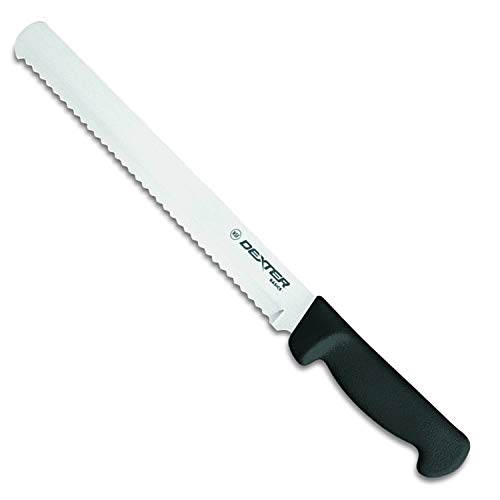
Dexter-Russell Basics P94804B 10" Scalloped Slicer/Bread Knife with Black Polypropylene Handle
The Dexter-Russell Basics P94804B is the article's budget-friendly bread and food slicer. Its 10-inch scalloped blade provides useful reach while keeping the supplied price at just $23.
Who Should Buy It
Home cooks who want a dedicated bread knife without spending much should consider it. It is particularly suitable for occasional bread slicing and budget-focused kitchens.
Why We Pick It
It earned its position because the long 10-inch scalloped blade and durable polypropylene handle provide a practical bread-slicing solution at a low supplied price.
Features & Benefits
| Feature | Benefit |
|---|---|
| 10-inch blade | provides reach for large loaves |
| Scalloped edge | helps slice bread and baked foods |
| High-carbon steel | supports edge durability |
| Hollow-ground edge | creates a beveled cutting surface |
| Polypropylene handle | durable everyday grip |
Pros & Cons
| Pros | Cons |
|---|---|
| ✓ Low supplied price | ✕ Specialized knife |
| ✓ 10-inch reach | ✕ Less premium than the Tojiro ### |
| ✓ Scalloped edge |
Why We Choose It
The Dexter-Russell Basics P94804B is the budget-friendly bread knife in this lineup. At the supplied $23 price, it adds a dedicated scalloped slicer without a premium investment.
The supplied specifications identify high-carbon steel, a hollow-ground edge, and a black polypropylene handle. The 10-inch size provides useful reach for bread and other foods.
Features and Benefits
- 10-inch blade: Gives enough length for slicing across large loaves.
- Scalloped edge: Helps cut through bread and other foods without requiring a smooth chef’s-knife edge.
- High-carbon steel: Supports edge durability and resistance to wear.
- Hollow-ground edge: Creates a beveled cutting surface for sharpness.
- Polypropylene handle: Resists impacts and wear during regular kitchen use.
- Textured handle: Helps limit slipping during slicing.
Pros and Cons
| Pros | Cons |
|---|---|
| Low $23 supplied price | Specialized knife |
| 10-inch reach | Basic handle design |
| Scalloped cutting edge | Not intended for general chopping |
| Durable polypropylene handle | Less premium than the Tojiro |
Editor Analysis
Who should buy it
This is the practical choice for someone who wants a dedicated bread slicer without spending much.
Who should avoid it
Choose the Tojiro instead if Japanese construction and a more premium presentation matter more than price.
Important limitations
A bread knife cannot replace a chef’s knife for chopping, mincing, or general meal preparation.
What we noticed
The low price is the main attraction. The Dexter-Russell gives a home kitchen a useful specialty blade without a large investment.
What knives should every home cook have?
A basic kitchen usually needs a chef’s knife, paring knife, and bread knife. A santoku or vegetable knife can then provide an alternative cutting style.
| Knife | Main Job | Why It Matters |
|---|---|---|
| Chef’s knife | General preparation | Handles the widest range of ingredients |
| Paring knife | Peeling and detail work | Provides control on small ingredients |
| Bread knife | Bread and baked foods | Long serrated edges cut crusts cleanly |
| Santoku | Chopping and slicing | Offers a shorter alternative to a chef’s knife |
| Vegetable knife | Vegetable preparation | Works well for cooks who prepare many vegetables |
For most kitchens, three core blades provide more value than a large knife block. WÜSTHOF’s own knife education similarly identifies a chef’s knife, paring knife, and bread knife as three key kitchen knives. WÜSTHOF’s knife anatomy guide provides additional information about common knife types.
What makes a good kitchen knife for home cooking?
A good kitchen knife should match the cutting tasks, hand size, preferred technique, maintenance habits, and budget of the cook.
Why does blade length matter?
Blade length affects reach, control, and maneuverability. An 8-inch chef’s knife offers broad versatility, while a 3.25-inch paring knife provides better control for small tasks.
Is an 8-inch chef’s knife better than a 6.5-inch knife?
An 8-inch blade is usually more versatile, while a 6.5-inch knife can feel easier to control. The better size depends on the cook’s hand, technique, and typical ingredients.
Why does blade steel matter?
Blade steel affects edge retention, hardness, corrosion resistance, sharpening behavior, and durability. However, steel type alone does not determine whether a knife is good.
Does full tang construction matter?
Full tang construction can provide a solid connection between the blade and handle. However, cutting performance also depends on blade geometry, steel, sharpening, balance, and handle design.
What is edge retention?
Edge retention describes how well a knife keeps its cutting edge during use. Harder steels can hold fine edges longer, but sharpening difficulty can also increase.
Chef knife vs. santoku: which is better?
A chef’s knife is usually the more versatile choice, while a santoku offers a shorter, more compact cutting profile.
| Feature | Chef’s Knife | Santoku |
|---|---|---|
| Typical size | 8 inches | 6–7 inches |
| Best for | General preparation | Chopping and slicing |
| Cutting style | Rocking and chopping | Push cutting and chopping |
| Blade reach | Longer | Shorter |
| Good for beginners | Yes | Yes |
A chef’s knife makes the better first purchase when only one large knife is needed. Meanwhile, the MAC and Wüsthof santoku models are attractive alternatives for cooks who prefer shorter blades.
Japanese vs. German kitchen knives: what is the difference?
Japanese-style knives generally emphasize lighter handling and fine cutting edges, while German-style knives often emphasize heft, durability, and versatility.
| Characteristic | Japanese-Style | German-Style |
|---|---|---|
| Typical feel | Lighter and precise | Heavier and substantial |
| Blade profile | Often thinner | Often thicker |
| Edge design | Often finer | Often more robust |
| Examples here | Misono, MAC, Tojiro | WÜSTHOF |
| Best fit | Precision-focused cooks | General-purpose cooks |
Neither style is automatically better. The right choice depends on cutting technique, preferred weight, sharpening habits, and budget.
How do you choose a good kitchen knife?
Start with the tasks performed most often, then choose the blade type, size, steel, handle, and maintenance level that match those tasks.
- Choose the main knife type: Start with a chef’s knife for broad versatility.
- Select the blade length: Choose 8 inches for versatility or a shorter blade for more control.
- Consider steel: Balance sharpness, edge retention, corrosion resistance, and sharpening needs.
- Check the handle: Pick a grip that feels secure and comfortable during repeated cutting.
- Consider weight: Heavier German knives can feel stable, while lighter Japanese knives can feel nimble.
- Match maintenance: Choose a knife that fits the sharpening and cleaning routine.
- Set the budget: Spend more when better construction or specialized performance genuinely matters.
Are expensive kitchen knives worth it?
Expensive knives can be worth the money when better materials, construction, ergonomics, or cutting performance solve a real cooking need.
The Misono UX10 illustrates the premium end of this list. However, the $14.70 Victorinox paring knife can still cover its intended small tasks effectively.
Therefore, price should follow purpose. Spending $280.50 on a chef’s knife makes less sense if an affordable model already fits the cooking style.
Should you buy a knife set or individual knives?
Individual knives are usually better when a home cook wants specific blades without paying for unused pieces.
| Buying Method | Best For | Main Advantage | Main Drawback |
|---|---|---|---|
| Individual knives | Focused kitchens | Choose exactly what is needed | Can cost more when buying many pieces |
| Knife set | New kitchens | Provides several matching tools | May include unnecessary knives |
| Small core collection | Most home cooks | Balances usefulness and cost | Fewer specialty options |
A small collection built around a chef’s knife, paring knife, and bread knife usually covers the essential tasks. Add a santoku or vegetable knife when a specific cutting style justifies the extra blade.
How we choose kitchen knives for home cooks
We prioritize practical performance rather than simply selecting the most expensive knives.
- Versatility: Can the knife handle the tasks home cooks perform often?
- Blade design: Does the shape match the intended cutting job?
- Construction: Does the build support durability and control?
- Comfort: Does the handle support secure, controlled cutting?
- Maintenance: Does the knife require reasonable care for its intended audience?
- Value: Does the performance justify the supplied price?
- Use case: Does the knife clearly solve a particular cooking need?
We also separate specialty knives from all-purpose models. A bread knife should not compete with a chef’s knife on versatility because the two tools solve different problems.
What are the most common kitchen knife buying mistakes?
The biggest mistake is choosing a knife based only on price, appearance, or brand name.
Buying too many knives
A large knife block can contain blades that rarely leave the drawer. Start with the knives that match regular cooking tasks.
Choosing the wrong size
A very long blade can feel awkward for small hands. A very short blade can slow down preparation of large ingredients.
Ignoring maintenance
Even an expensive knife becomes frustrating when the edge stays dull. Regular honing and proper sharpening help preserve cutting performance.
For a practical maintenance routine, see our guide on how to sharpen kitchen knives.
Using the wrong cutting surface
Hard surfaces can damage a knife edge. Use a suitable cutting board instead of glass, stone, or similarly hard surfaces.
If raw meat is part of regular meal preparation, pair the knives with a suitable cutting board for raw meat.
Putting every knife in the dishwasher
Dishwasher compatibility varies by knife. When a manufacturer recommends hand washing, follow that guidance.
How should kitchen knives be stored?
Store kitchen knives so the blade does not strike other utensils or hard surfaces. A knife block, magnetic strip, or protective sheath can reduce unnecessary edge damage.
Good storage also keeps sharp blades away from loose items in crowded drawers. If kitchen storage is becoming difficult, our guide on how to organize kitchen cabinets can help create more usable space.
How do you maintain kitchen knives?
Wash knives according to the manufacturer’s instructions, dry them promptly, store them safely, and sharpen the edge when needed.
- Wash the blade with suitable soap and water.
- Dry the knife immediately.
- Store the blade safely.
- Use a honing rod when appropriate to maintain the edge.
- Sharpen the knife when honing no longer restores cutting performance.
- Avoid cutting on hard surfaces.
🔪 Pro Tip: A sharp knife is easier to control than a dull knife. Keep the edge maintained instead of waiting until cutting becomes difficult.
Which knife is best for vegetables?
The Global 7-inch Vegetable Knife and Tojiro F-502 are the strongest vegetable-focused choices in this lineup.
The Global emphasizes lightweight balance and vegetable preparation. The Tojiro adds a VG-10 core, 60 HRC hardness, and a fine listed edge angle for cooks who prefer a Japanese-style blade.
Which knife is best for bread?
The Tojiro is the premium Japanese bread option, while the Dexter-Russell provides the better budget route.
The Tojiro costs more but offers Japanese construction and a natural wood handle. The Dexter-Russell costs $23 based on the supplied price and uses a 10-inch scalloped slicer design.
Which knife is best for beginners?
The WÜSTHOF Classic 8-inch chef’s knife is the strongest beginner-friendly main knife, while the Victorinox paring knife is an inexpensive secondary blade.
The WÜSTHOF offers broad versatility for everyday cooking. The Victorinox adds an affordable small knife for peeling, trimming, garnishing, and detail work.
Frequently Asked Questions About Kitchen Knives
What is the best kitchen knife for home cooks?
The WÜSTHOF Classic 8 Inch Chef’s Knife is the best overall choice in this lineup because it combines an 8-inch versatile blade with forged construction and a full-tang, triple-riveted design.
What knives should every home cook have?
Most kitchens can cover essential preparation with a chef’s knife, paring knife, and bread knife. A santoku or vegetable knife can provide useful extra capability.
What is the best chef’s knife for everyday use?
The WÜSTHOF Classic 8-inch chef’s knife is the strongest everyday option here because its blade handles chopping, slicing, mincing, and dicing.
What size chef’s knife is best for home cooks?
An 8-inch chef’s knife is a strong starting size because it offers a useful balance of reach, control, and versatility.
Are Japanese or German kitchen knives better?
Neither style is universally better. Japanese knives often appeal to cooks seeking light handling and fine edges, while German knives often suit cooks who prefer heft and robust everyday use.
What brand makes the best kitchen knives?
There is no single best brand for every cook. WÜSTHOF, Misono, MAC, Tojiro, Global, and Victorinox each serve different needs and price ranges.
Is an expensive kitchen knife worth it?
An expensive knife can be worthwhile when its construction, edge, balance, and handling provide benefits that match the cooking style.
What is the difference between a chef’s knife and a santoku knife?
A chef’s knife usually has a longer blade and supports a broad range of cutting techniques, while a santoku typically has a shorter, compact profile.
How many kitchen knives does a home cook really need?
Three knives can cover most basic preparation: a chef’s knife, a paring knife, and a bread knife.
What knives should a beginner buy?
A beginner should start with a comfortable chef’s knife, then add a paring knife and bread knife as needed.
Are knife sets worth buying?
Knife sets can be worthwhile for a new kitchen, but individual knives often provide better value when specific tools are needed.
How often should kitchen knives be sharpened?
Sharpening frequency depends on use, cutting surfaces, and steel. Sharpen when regular honing no longer restores the knife’s cutting performance.
What steel is best for kitchen knives?
The best steel depends on the desired balance between edge retention, toughness, corrosion resistance, and sharpening ease.
How do I choose a good kitchen knife?
Choose a blade type and size that match regular cooking tasks, then consider steel, handle comfort, balance, maintenance, and price.
Can kitchen knives go in the dishwasher?
Some knives have dishwasher-safe components, but hand washing is generally the safer choice for preserving blade and handle condition.
Why are Japanese kitchen knives so sharp?
Many Japanese-style knives use thin blade geometry and fine edge angles that support precise cutting. Steel hardness and sharpening also influence sharpness.
Should I buy a knife set or individual knives?
Individual knives are usually the better choice when only a few specific blades are needed. A set makes more sense when a new kitchen needs several matching tools.
Should a home cook use an 8-inch or 10-inch chef’s knife?
An 8-inch chef’s knife is the easier general-purpose starting point, while a 10-inch blade provides more reach for larger ingredients.
How do you maintain kitchen knives?
Clean and dry the blade promptly, store it safely, use an appropriate cutting board, hone when necessary, and sharpen when the edge becomes dull.
Which kitchen knife should you buy?
The WÜSTHOF Classic 8-inch chef’s knife is the best starting point for most home cooks because it covers the broadest range of everyday tasks.
However, the best choice changes with the cooking style. Choose the Misono UX10 for premium precision, the MAC for a Japanese santoku, the Global for vegetable preparation, or the Victorinox for affordable detail work.
For bread, the Dexter-Russell offers excellent budget value, while the Tojiro provides a more premium Japanese alternative.
| Need | Recommended Pick | Why |
|---|---|---|
| One all-purpose knife | WÜSTHOF Classic 8″ | Versatile chef’s knife |
| Premium chef’s knife | Misono UX10 | Precision-focused design |
| Japanese santoku | MAC Professional 6.5″ | Compact and precise |
| German santoku | Wüsthof Classic 7″ | Hollow-edge German design |
| Vegetables | Global 7″ | Lightweight vegetable-focused blade |
| Japanese vegetable knife | Tojiro F-502 | VG-10 core and fine edge |
| Budget paring | Victorinox 3.25″ | Low cost and versatile detail work |
| Premium paring | WÜSTHOF Classic 3.5″ | Full-tang premium construction |
| Premium bread knife | Tojiro | Japanese construction and long reach |
| Budget bread knife | Dexter-Russell 10″ | Affordable scalloped slicer |
Final Thoughts
The best kitchen knife is not necessarily the most expensive model. The right choice is the blade that fits the cooking tasks, cutting style, maintenance routine, and budget.
For most home kitchens, start with one versatile chef’s knife. Add a paring knife and bread knife next. Specialized santoku and vegetable knives can follow when the cooking style calls for them.
- WÜSTHOF Classic 8 Inch Chef’s Knife — Best overall for everyday cooking.
- Misono UX10 Chef’s Knife — Best premium option for precision-focused cooks.
- MAC Professional Series 6.5″ Santoku — Best Japanese santoku for compact, precise preparation.
- Wüsthof Classic Hollow Edge Santoku — Best German santoku for cooks who prefer substantial knives.
- Global 7″ Vegetable Knife — Best vegetable-focused choice for lightweight handling.
- Tojiro Kitchen Knife F-502 — Best Japanese vegetable knife for a fine, hard edge.
- Victorinox 3.25″ Paring Knife — Best budget option for peeling and detail work.
- WÜSTHOF Classic 3.5″ Paring Knife — Best premium paring knife for detailed preparation.
- Tojiro Japan Hand Made Bread Knife — Best Japanese bread knife for home baking.
- Dexter-Russell Basics P94804B 10″ Scalloped Slicer — Best budget bread knife at the supplied price.
Related Articles
Best Kitchen Knives for Home Cooks: 13 Top Picks
September 4, 2026
Best Cookware Sets for Every Kitchen: 14 Top Picks Compared
September 4, 2026
Best Cutting Boards for Every Kitchen: 12 Top Picks
September 4, 2026